.png)
 1 hour ago
6
1 hour ago
6

The U.S. Supreme Court is set to hear arguments on March 23 regarding whether federal Election Day law pre-empts a state law allowing election workers to count mail-in ballots received after Election Day.
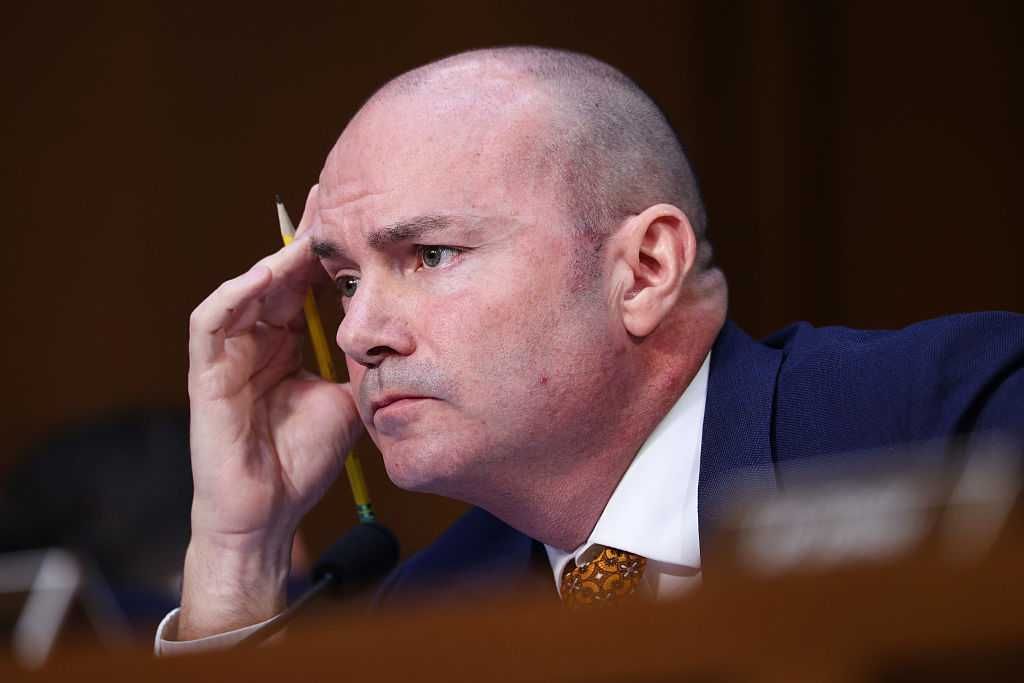
A band of conservatives including Sen. Mike Lee (R-Utah) urge the high court in an amicus brief to be filed on Thursday to consider the inevitable harms that would follow permitting states to flout the Constitution and render Election Day little more than an "abstraction," Blaze News has exclusively learned.
'Congress chose one day for federal elections, and one day only.'
The case in question, Watson v. Republican National Committee, is the result of a years-long battle over a COVID-era Mississippi law passed by the Magnolia State's Republican trifecta that permits the counting of mail-in absentee ballots postmarked by the date of the election but received up to five business days after Election Day.
The RNC and the Mississippi GOP stressed at the outset that mail-in voting is "starkly polarized by party" and "the late-arriving mail-in ballots that are counted for five additional days disproportionately break for Democrats."
While it has narrowed since 2020, the partisan divide in mail-in voting remained substantial in the 2024 election — which helps explain why so many Democrat-aligned groups have defended the practice and the Mississippi law.
The U.S. Court of Appeals for the Fifth Circuit ruled against Mississippi in October 2024, stating that its late-ballot counting statute was pre-empted by federal law. Last year, however, the state asked SCOTUS to get involved and reinstate its post-Election Day grace period.
RELATED: Lone Republican defies Trump, votes to tank the SAVE Act
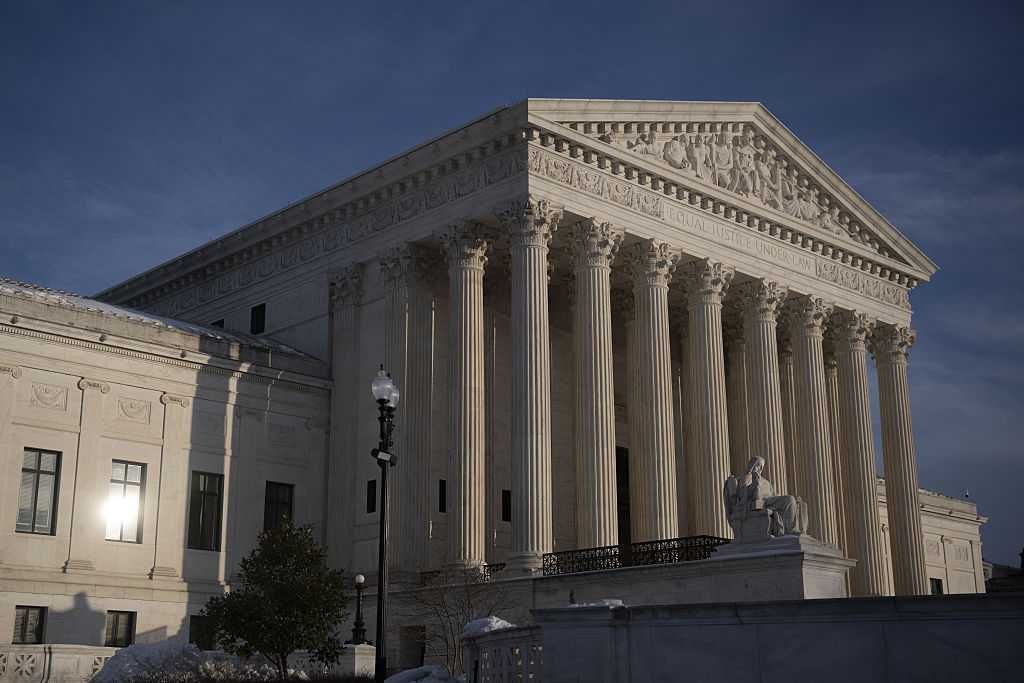 Photo by Celal Gunes/Anadolu via Getty Image
Mississippi maintains that late counts are acceptable as "federal election-day statutes require only that the voters cast their ballots by election day" — that "an election requires ballot casting — not ballot receipt."
Sen. Lee, eight other GOP senators, and 15 congressional Republicans joined the American Center for Law and Justice in filing an amicus brief on Thursday in support of the legal challenge, underscoring that Mississippi's absentee ballot scheme threatens the electoral reliability and uniformity "foundational to democratic government."
Lee said in a statement to Blaze News, "Congress, exercising its constitutional authority to set the times, places, and manner of federal elections, designated one federal Election Day."
"States counting ballots received after Election Day clearly violate the certainty, finality, and trust Congress intended to establish by having nationwide elections take place on one set date," continued the senator.
The brief:
- emphasizes that the purpose of the relevant federal Election Day statutes "was and is to prevent voter fraud and state manipulation of federal elections and to promote uniformity in the selection of federal officers";
- rejects "the notion that strict construction of this arrangement violates principles of federalism"; and
- seeks to show "how, absent strict construction of the Election Day Statutes, there is no limiting principle and thus the Constitution's Election Clause would be meaningless or unenforceable."
"A Constitution that so jealously rationed federal power chose, in this specific domain, to speak unequivocally: Congress would have the last word in the 'Times' of Elections for federal officers," says the brief. "Congress exercised that power here. It picked a day. One day."
The brief intimated that should the state law and the corresponding legal interpretation stand, the "very evils Congress enacted the Election Day statutes to prevent — rolling elections, strategic voting, and prolonged uncertainty" — would be likely become inevitable.
The brief suggests further that to treat Election Day as a "philosophical concept untethered to actual deadlines" would liberate states from much-needed guardrails and render them "free to continue the election well beyond the Congressional mandated election day."
"Congress chose one day for federal elections, and one day only," the brief says in closing. "The counting of late-arrived ballots [flouts] this choice by altering the pool of received votes after Election Day, in other words, by changing the results of an election that has already taken place."
Sen. Lee noted that he looks forward "to the Supreme Court recognizing that states are not permitted to conduct interminable rolling elections with late-arriving ballot surprises that invite fraud and undermine trust in American elections."
Should the high court affirm that federal law pre-empts the state law, 18 other states would likely be impacted.
Like Blaze News? Bypass the censors, sign up for our newsletters, and get stories like this direct to your inbox. Sign up here!








 English (US)