.png)
 1 hour ago
2
1 hour ago
2
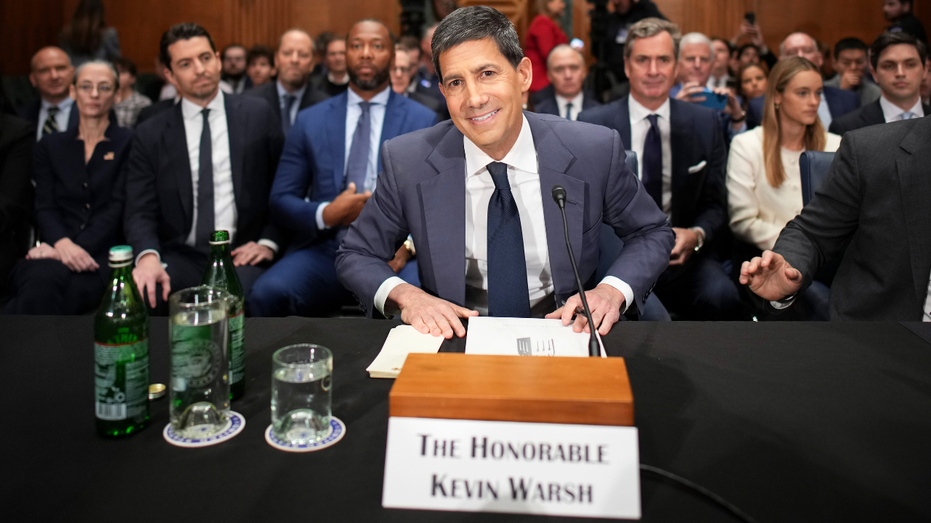
Kevin Warsh is poised to become chair of the Federal Reserve under unusual circumstances after a historically partisan vote cleared the way for him to succeed the departing chairman Jerome Powell, whose term as chair ends Friday.
The Senate confirmed Warsh for a 14-year term on the bank’s Board of Governors by a 51-45 vote Tuesday. Sen. John Fetterman of Pennsylvania was the only Democrat to cross the aisle in favor of Warsh.
Republican senators backed Warsh almost unanimously, but Sens. Shelley Moore Capito of West Virginia, Pete Ricketts of Nebraska, and Cindy Hyde-Smith of Mississippi did not vote.
The Senate then voted by the same margin to advance his nomination as chair of the Federal Reserve to replace the term-limited Powell.
Powell has said he intends to remain on the Board of Governors until he is certain the Department of Justice has dropped an investigation of alleged inconsistencies in congressional testimony about Federal Reserve building renovations, which he views as politically motivated attempt to influence monetary policy.
The department dropped the probe as Sen. Thom Tillis, R-N.C., who sits on the Senate Banking Committee, said he would not advance Warsh without its termination.
President Donald Trump has put pressure on Powell throughout his second term, urging him to ease interest rates.
Federal Reserve nominations are generally cleared on a bipartisan basis.
In 2018, the Senate voted to confirm Jerome Powell by an 84-13 margin, and he was confirmed again in 2022 by an 80-19 vote.
This is par for the course, as Janet Yellen was confirmed by a 56-26 vote in 2014, and Ben Bernanke was confirmed 70-30 in 2010—which broke the record at the time for being the narrowest confirmation of a Fed chairman in history.
Warsh is hardly an outsider pick, as he served on the Fed’s Board of Governors from 2006 until 2011.
Senate Majority Leader John Thune, R-S.D., accused Democrats Wednesday morning of being excessively partisan in their opposition to Warsh.
“This is just how bad Trump derangement syndrome has gotten on the other side of the aisle,” Thune said. “It doesn’t seem to matter who President Trump nominates. Democrats blindly oppose them. Democrats aren’t interested in a person’s qualifications. All they care about is opposing President Trump.”
Sen. Elizabeth Warren of Massachusetts, the top Democrat on the Senate Banking Committee, has been a prominent critic of Warsh, accusing him of lacking independence from the president.
“No Republican claiming to care about Fed independence should support moving forward the nomination of Kevin Warsh, who proved in his nomination hearing to be nothing more than President Trump’s sock puppet,” Warren wrote in a statement before the vote.
Warren harshly criticized Powell during President Joe Biden’s administration, putting pressure on him to ease interest rates in order to support government-subsidized green energy companies.
In August 2025, Trump attempted to remove Lisa Cook form the Board of Governors, which was overturned by the Supreme Court. In September 2025, the Senate confirmed Trump’s pick Stephen Miran to join the Board of Governors after the resignation of Adriana Kugler.









 English (US)