.png)
 1 hour ago
5
1 hour ago
5
Editor’s note: This is a lightly edited transcript of today’s video from Daily Signal Senior Contributor Victor Davis Hanson. Subscribe to our YouTube channel to see more of his videos.
James Comey, the former director of the FBI, was again indicted recently, this time for putting a picture of seashells on his social media that were arranged to convey a message threatening Donald Trump. And the message was “86/47.”
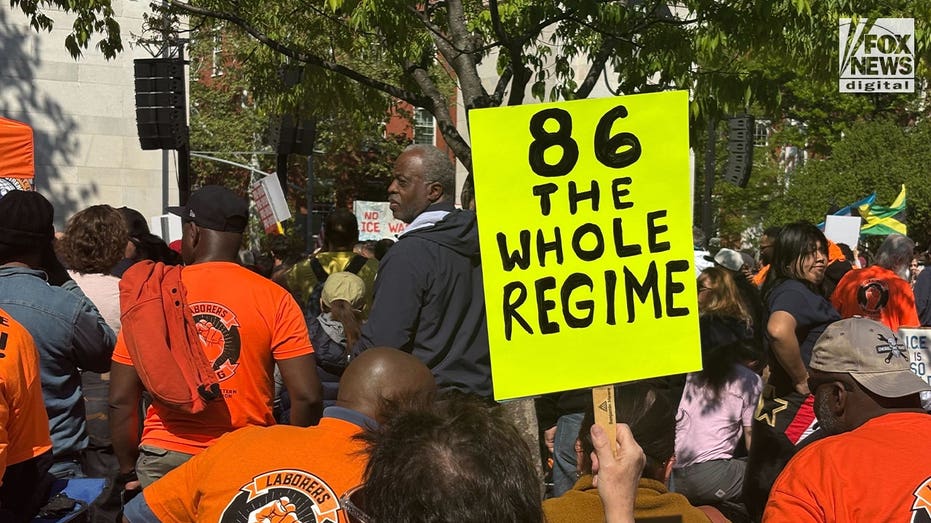
In other words, however you define 86, I grew up in the 1960s and 1970s, when the term was used to eject somebody from a bar.
But over the ensuing decades, people have used it in an eliminationist fashion. The mafia, get rid of somebody, “86 them,” “kill them.”
But here’s the problem. James Comey says that he was just walking along the beach and that he happened to see this message, and he didn’t quite know what it meant. But why would he put something on social media if he didn’t know what it meant?
And how in the world would the FBI director—who’s supposed to be knowledgeable about all the terms that gangsters use or bars use; this comes with the field—and he claims he didn’t know what he was doing? But why would he do it in the first place? More importantly, we have had three assassination attempts against Donald Trump.
So when you look at the case ostensibly, you say, “Well, what’s so wrong in a free-speech America with just putting out a seashell message?” Well, nothing is wrong if that’s what it was, but we don’t know what it was.
In other words, we don’t know to what degree he might have made the message deliberately or whether he deliberately wanted to convey a message in a climate in which the president of the United States is in constant jeopardy of being shot, and he was the former FBI director.
Now, most of our legal eagles, on both the Left and Right, agree that it’s a weak case and, under the First Amendment, it will be thrown out.
But there’s another wrinkle to it, and that is we were told this was a weeks-long, even a months-long investigation. Ostensibly, it didn’t take any time to investigate a seashell photo.
All you do is look at it. Maybe you talk to his family or whatever, and there’s the evidence. But it seems as if they were subpoenaing personal tweets, I don’t know, correspondence with his family and friends. The point of all that apparently is that the DOJ is trying to see if he contextualized what he was doing.
If he said something like, “This is neat. I threaten the president with a vicarious method that kind of exculpates me, but it still gets the message,” I don’t know if that happened, but there’s something more to the case, because I don’t think otherwise they would have brought it.
Finally, this particular case may not go to trial. It may or may not, depending on what the investigation has found, but it’s in a larger context. It’s really disturbing.
Remember that he went before the House Judiciary and Oversight committees, and he testified about all the aspects of the Russian collusion case and all the misadventures of the FBI. On 245 occasions, James Comey said [variations of] “I don’t know. I don’t remember. I can’t think of anything.”
In other words, he deliberately stonewalled a congressional investigation while he was under oath. If any of you listening were to have, I don’t know, not reported $10,000 and the IRS asked you about the conditions of how you earned it, and you said, “I don’t know. I can’t remember,” I don’t think that would last very long.
In addition to that, you remember that he had a private conversation shortly before he was fired with the president of the United States. After that conversation was over, in which he claims that Donald Trump said to go easy on former National Security Adviser Michael Flynn, and Trump says he explicitly asked him if Trump himself was the object of an investigation, which we know he was, and Comey had assured him that he was not.
Comey went out and, on FBI pad, he memorialized that, at least his version.
And then he deliberately took a third-party friend and gave him that message, that description of the conversation, with the sole intent to leak it to The New York Times.
And then, when the inspector general, Michael Horowitz, looked at that, he claimed that a private conversation with the president of the United States covering some of the most intimate matters of governance was not classified.
He said it was confidential. And so there were never any indictments lodged against James Comey for, on 245 occasions, not telling the truth, leaking what should have been a classified document that the government owned and that he took out himself.
He did not put it in the FBI filing system. He took it, as he said, kind of an insurance policy, and then he deliberately leaked it to The New York Times.
I could add a couple of epilogues to the James Comey story. In addition to all this, you’ve got to remember that he was the architect of Operation Crossfire Hurricane. The FBI hired Christopher Steele as a contractor and paid him money even though, according to the testimony of FBI investigators, they could not corroborate much or most of the Christopher Steele dossier.
They couldn’t. And yet they used that dossier, by the testimony of Andrew McCabe, Comey’s successor. They used that dossier to get FISA warrants against U.S. citizens. An erroneous document was used to confuse the judge as if there really was some type of Russian collusion, and therefore they had a right to spy on people like Carter Page.
And then we get back to the 2016 election when Hillary Clinton used a private home-brewed server against the law to do that. If you’re secretary of state, it might have been a misdemeanor, might have been a felony, depending on how it was interpreted.
Number two, her husband, Bill Clinton, met the attorney general of the United States, Loretta Lynch, kind of on an accidental private-plane rendezvous at the Phoenix airport right in the middle of this investigation of Bill Clinton’s wife.
Then we also learned that when these emails were subpoenaed, they were destroyed by Hillary Clinton, and the servers themselves were destroyed. And Comey—and this is very interesting—Comey was the director of the FBI. He was not the attorney general, but he took on the role of both FBI director investigator and Department of Justice prosecutor to adjudicate himself.
In other words, he presents evidence to the attorney general, who then adjudicates whether it’s worthy to go to trial, and that person was James Comey. And of course, he said that while Hillary had broken the law, no normal prosecutor would have furthered the case and brought her an indictment. What am I getting at?
I don’t know the degree to which the DOJ will be able to file an indictment that sticks and will have an actual trial. But that said, what James Comey did to the FBI on numerous occasions was a betrayal of his office and a betrayal of the United States.
And just to finish, he was not an isolated case.
Robert Mueller, his predecessor, testified before the House committee and said he did not know much at all about the Steele dossier. The Steele dossier was the sole catalyst that prompted his appointment as special counsel. He said under oath he didn’t even know much about it, couldn’t talk about it.
I just mentioned his successor, James Comey’s successor, interim chief of the FBI, Andrew McCabe. On four occasions, he lied, two of them under oath, to federal investigators. He lied about leaking material about an investigation.
And finally, Christopher Wray, the fourth FBI director in succession, didn’t tell us the complete truth about the role of the FBI on Jan. 6 and the aftermath—the role and the number of FBI informants who were there on Jan. 6, the exact role of the FBI surveilling traditional Catholics. He said it was an isolated case. It was not, and he didn’t tell us why the FBI was going to school board meetings, likely at the prompt of teachers’ unions.
So we’ve had a miserable, despicable record of four FBI directors in succession who have either lied to Congress or broken the law or lied to investigators or haven’t come full and told the truth to a congressional committee under oath.
And so, whatever we find out with James Comey, he’s got a lot of culpability, moral if not legal.
We publish a variety of perspectives. Nothing written here is to be construed as representing the views of The Daily Signal.








 English (US)