.png)
 1 hour ago
1
1 hour ago
1
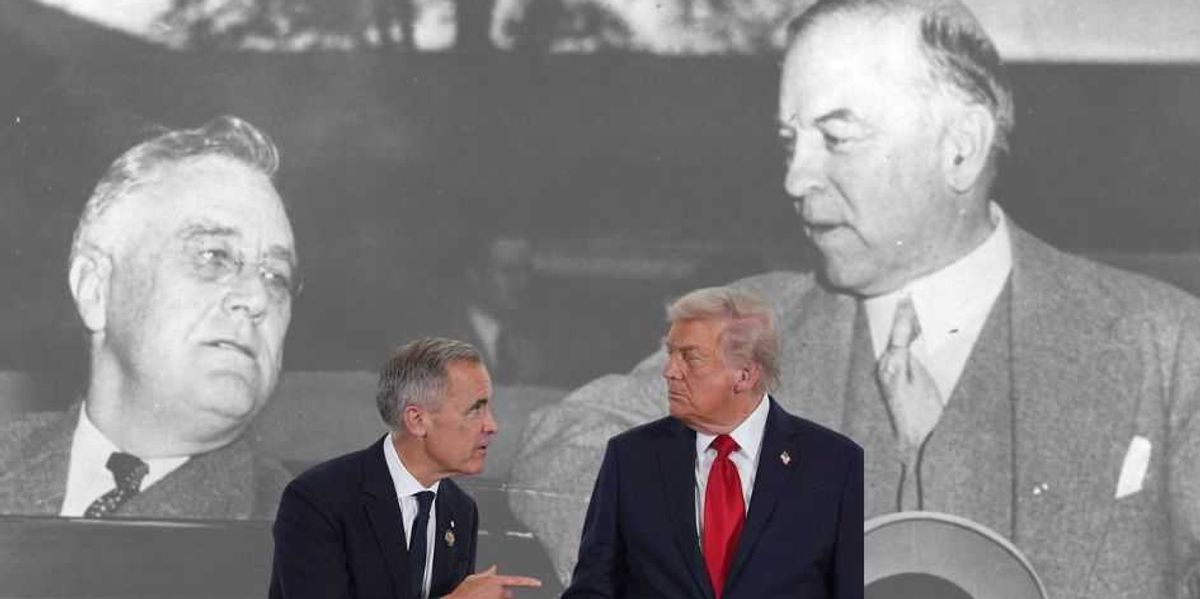
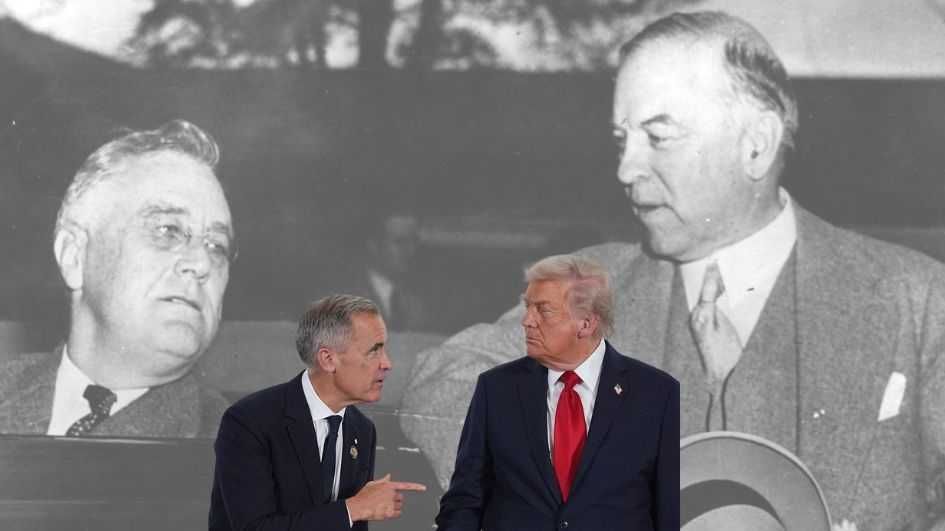
The Pentagon appears to be sending Ottawa a message: Rhetoric is no substitute for military capability.
The Department of Defense announced Monday it was “pausing” the 86-year-old Permanent Joint Board on Defense between the United States and Canada, according to Undersecretary of War for Policy Elbridge Colby. The move comes amid mounting frustration in Washington over Canada’s chronic defense underinvestment — and Prime Minister Mark Carney’s increasingly confrontational rhetoric toward President Donald Trump.
'We can no longer avoid the gaps between rhetoric and reality. Real powers must sustain our shared defense and security responsibilities.'
Established in 1940 by President Franklin Roosevelt and Prime Minister William Lyon Mackenzie King, the board became one of the earliest pillars of continental defense cooperation. Coming as Nazi Germany tightened its grip on Europe and fears grew over Atlantic security, the agreement reflected Roosevelt’s recognition that American and Canadian security could no longer be treated separately.
That alliance eventually evolved into NORAD and decades of deep military integration between the two countries.
All talk
Now Washington appears to be signaling that the relationship cannot continue on autopilot.
“We can no longer avoid the gaps between rhetoric and reality,” Colby wrote on X. “Real powers must sustain our rhetoric with shared defense and security responsibilities.”
Colby argued that while a militarily capable Canada benefits the United States, Ottawa has repeatedly failed to meet its defense commitments in a credible way.
The timing is awkward for Carney, whose government has loudly projected Canadian independence from Washington while remaining vague about how it intends to rebuild the country’s depleted armed forces.
RELATED: 'AMERICAN INVASION': Flailing Canada PM Mark Carney invokes historical grudge in latest lob at Trump
 George Rose/Anna Moneymaker/Getty Images
Jet blues
Although Ottawa recently claimed the government had finally reached NATO’s benchmark of spending 2% of GDP on defense, critics have questioned how the government arrived at that number. Media reports have indicated that the Liberals counted items such as landscaping at military bases and civilian airport infrastructure upgrades as defense expenditures.
More tellingly, Carney’s April 28 Spring Economic Statement reportedly contained little detail on major procurement priorities.
That uncertainty now extends to Canada’s planned purchase of 88 Lockheed Martin F-35 fighter jets. Despite years of delays and political debate, the Carney government is still reviewing the order, with Defense Minister David McGuinty recently confirming that alternatives remain under consideration.
One possibility floated by Ottawa is a mixed fleet pairing the American-made F-35 with Sweden’s Saab Gripen fighter. But U.S. Ambassador to Canada Pete Hoekstra has repeatedly warned that Canada’s role in NORAD could be jeopardized if Ottawa fails to follow through on the full F-35 purchase.
Buy or beware
The concern is not merely political but operational. Every branch of the U.S. military that flies fighter aircraft is transitioning to the F-35 platform, which is also used by several of Canada’s closest defense partners, including the British Royal Air Force and the Royal Australian Air Force. Hoekstra has argued that the Gripen would create interoperability problems inside a continental defense structure increasingly built around the F-35 ecosystem.
For Washington, the frustration is becoming increasingly obvious: Canada wants the diplomatic stature and moral authority of a serious middle power while continuing to hesitate on the military commitments required to sustain that role.
The Pentagon’s decision to pause the defense board may ultimately prove symbolic. But symbols matter in alliances — especially when they come from Washington.
After decades of assuming continental defense cooperation was automatic, the United States now appears willing to publicly question whether Canada is prepared to carry its share of the burden.






 English (US)