.png)
 2 hours ago
3
2 hours ago
3

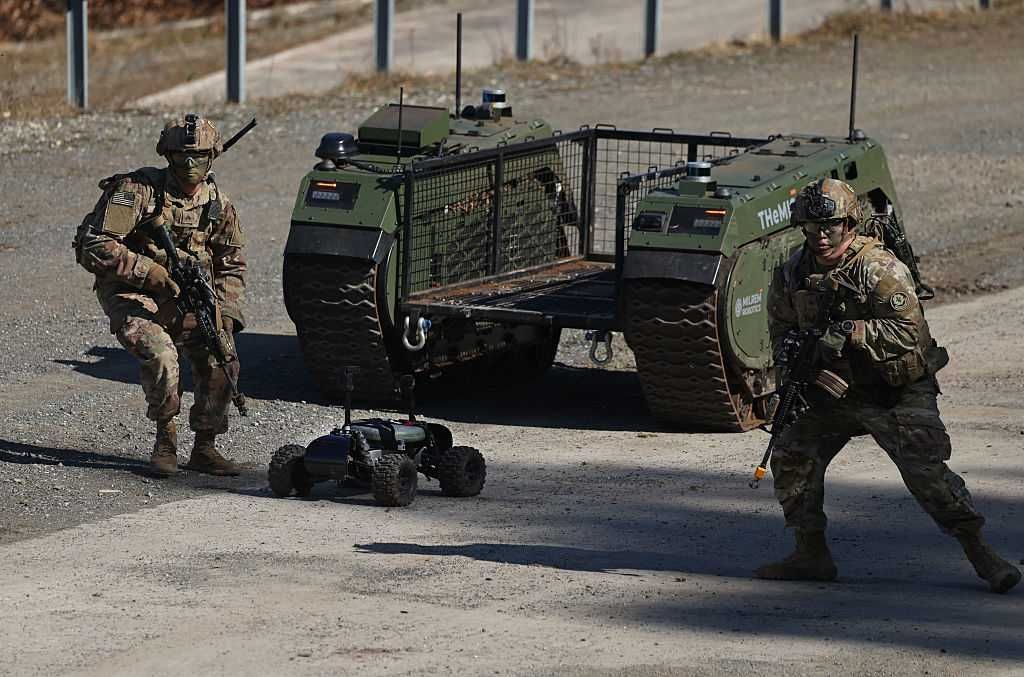
Millions over budget and years behind schedule have become defining features of the U.S. defense industrial base, and this dysfunction is colliding with a radically different character of war.
Asymmetric, robotic, and growingly autonomous systems are tactics being employed today by our adversaries. The shift in global security erodes the traditional advantages of scale, time, and mass that America’s defense industrial base was designed to deliver.
It also exposes an acquisition system that cannot move at the speed of relevance.
The fusion of established and startup contractors is the best strategic framework to reshore American manufacturing and reinvigorate our nation’s defense industrial base.
Rewiring these trends will depend on a new posture — one that should be defined by partnerships that marry the scale and sustainment power of established manufacturers with the speed and rapid system iteration of smaller but highly capable companies.
The influx of venture capital into defense technology has given rise to bold, disruptive upstarts that are leveraging agile, product-led engineering, operator-centric design, and best practices from the commercial ecosystem.
New, smaller companies like Palantir and Anduril rapidly iterate their systems and build breakthrough technologies on their dime — well before the U.S. government’s lengthy requirement-writing process plays out.
At the same time, established manufacturers like Lockheed Martin and Boeing have reignited their innovation arms and reprioritized significant resources to meet the modern needs of the Department of War.
Innovation without scale is as risky as the other way around. That’s why the fusion of established and startup contractors is the best strategic framework to reshore American manufacturing and reinvigorate our nation’s defense industrial base. When they are brought together, this business model creates real results.
General Dynamics Land Systems and Epirus, for example, have partnered to develop two mobile counter-UAS systems for short-range air defense and critical asset protection. Lockheed Martin and Hadrian have inked an agreement to increase production of critical parts for missile systems. Northrop Grumman has invested in Firefly Aerospace to accelerate production of Firefly's launch vehicle. The list goes on.
These partnerships represent the epitome of American industrial excellence. Importantly, they also align with Secretary Pete Hegseth’s Warfighting Acquisition System by prioritizing the best practices from commercial technology development, AI integration into military technology, cloud-based architectures and system modularity, scalability, and software-driven upgradability.
Pairing establishment know-how and production capacity with startup integration cycles supports the War Department’s vision for rebuilding our military and is a tangible step the industry can take — and is taking today — to shorten the time between prototype development and operational deployment.
RELATED: The US military needs to adapt to modern warfare
 USAF/Getty Images
America’s competitive edge always has come from partnerships: between industry and government, between commercial and defense innovation bases, and between engineers and operators. The next era of defense technology development demands the same alignment.
Established contractors and newer startups are not competitors in this race, and there is no need for them to offer competing visions for the future of defense. On the contrary, they share a mission as the co-architects of deterrence.
When America’s established defense contractors and new, cutting-edge startups work together, scale meets speed and innovation meets integration.
This is the industrial base the moment demands and the one we should focus on building together.
This article was originally published by RealClearDefense and made available via RealClearWire.















 English (US)