.png)
OTTAWA — The video playing was clearly Pete Hoekstra, the frequently combative U.S. ambassador to Canada. But something was off. He kept referring to Canada as a partner?
“For all of the critical things that we need, Canada would be an ideal partner,” Hoekstra said in a prerecorded conversation at a conservative think tank in March.
Hoekstra ticked off the ways the two countries could work together: deepened military cooperation in the Arctic, including through Trump’s “Golden Dome”; beefed-up energy cooperation on oil and gas, critical minerals and uranium; coordinating on artificial intelligence. At one point, he even cited the George W. Bush-era rhetoric of building a “fortress North America.”
It was a detour from theacerbic,angry andhighly undiplomatic tone that Canadians had grown accustomed to from President Donald Trump’s man in Ottawa. The same man who wrote to The Globe and Maildemanding an apology for a column criticizing U.S. Olympic hockey players. The same man who reamed out a Canadian trade official with anexpletive-laden tirade at a high-profile gala. Yet here was Hoekstra, seemingly offering a helpful roadmap for exactly how Canada can partner with — and essentially survive — the United States under Trump.
“I don’t do ‘diplomatic speak’ very well,” Hoekstra said in a wide-ranging interview Thursday. “I think when they listen to what I have to say, they know exactly what my viewpoint is. And they may disagree with it, but at least they understand where I’m coming from and where the United States of America is coming from.”

Now one year into his job in the top diplomatic post, Hoekstra’s relationship with his Canadian hosts remains chilly. But it also seems as if both sides have at least begun to understand each other a bit more, with a pragmatic acceptance of their new realities.
“Pay attention to Pete Hoekstra,” said a Canadian official familiar with Canada-U.S. trade negotiations. “I know he’s easy to hate and vilify, but some of the shit he says is channeling what the administration wants.” This official, like several others in this story, was granted anonymity to speak candidly about a delicate relationship.
Hoekstra also may have come to realize that he’s had some challenges getting his message out to a skeptical population. In addition to the relative olive branch in his remarks calling Canada a partner, he’s been venturing out to meet people across the nation’s provinces, including vocal critics.
Hoekstra said his job is to deliver America’s message to Canada and “address the things that we believe are unfair in the Canada-U.S. trade relationship.”
“It’s not about me, OK. Donald Trump did not tell me to go to Canada and become liked,” Hoekstra said. “Matter of fact, I think he would have said ‘If you go to Canada and you’re liked, it probably means that you’re not doing your job.’”
Hoekstra pushed back against the notion that he’s not trusted by Canadians by pointing to his close relationship with the business community and Canada’s defense and security sectors, who he says are interested in working with the U.S. rather than Europe and Asia.
The U.S.-Canada relationship remains a critical one — for economic, geopolitical and security reasons, and it is in both countries’ interests to find some common ground.
The United States, Mexico and Canada face a July 1 deadline to initiate a formal review for their continental trade pact. Negotiations have moved along haltingly. U.S. Trade Representative Jamieson Greer recently threatened “enforcement action” against Canada’s continued ban on U.S. alcohol in many provinces, while Commerce Secretary Howard Lutnick had this to say about Canadian negotiators: “They suck.” Failing to reach an agreement would mean the end of a deal that Trump once considered a feather in his cap, and that would be economically devastating to his northern neighbor.
Inking a trade deal won’t ultimately be up to Hoekstra; that’s for Trump and Prime Minister Mark Carney to hash out alongside their trade officials. But if Hoekstra and Canadians can figure out a way to get along, perhaps the rupture between these longtime neighbors isn’t beyond repair.

The U.S. ambassador’s job in Canada used to be seen as a country club posting. The gig comes with a mansion on sprawling grounds in the Canadian capital’s ritziest neighborhood, with a hilltop view of the Ottawa and Gatineau rivers. Canadians and Americans perennially disagreed on softwood lumber trade, but that and other irritants were treated as Thanksgiving dinner table disputes. For the most part, both sides agreed to disagree.
Not so on Hoekstra’s watch.
Trump’s threats to annex Canada, along with his double-digit tariffs on certain goods, have enraged the public, leading to the elbows-up mentality that delivered Carney a stunning electoral victory last year. Trump’s standing among Canadians has sunk to historic lows, with 77 percent lacking confidence that Trump would do the right thing in foreign affairs.
And Hoekstra has embraced his boss’ approach, often acting as much as an enforcer as a diplomat. He has shrugged at Trump’s talk of a 51st state and expressed disappointment in what he called “anti-American” sentiment in Canada.
For one Canadian lawmaker, such rhetoric from Hoekstra echoed the behavior of an “abuser.”
“Abusers work hard to hide their abuse and can often appear to be very likeable, even charming. But the warning signs of abusive behaviour, regardless of the type of relationship, are fairly easy to spot,” Sen. Colin Deacon wrote in a LinkedIn post last fall.
Hoekstra was also criticized for cursing out Ontario’s trade representative to Washington at an annual gala hosted by the Canadian American Business Council last October. Hoekstra was apparently angry about a Canadian ad that used Ronald Reagan’s voice to criticize tariffs. Ontario Premier Doug Ford called on Hoekstra to apologize, but Hoekstra refused, saying he’s still waiting for an apology from Ford over the ad, which infuriated Trump and put trade talks on pause.

Hoekstra has been particularly surly over some provinces pulling American alcohol from store shelves in protest of Trump’s tariffs. In Canada, provincial governments regulate the sale of alcohol, not the federal government. Despite the “insult,” it hasn’t forced Hoekstra to go dry. He makes a point of bringing back American liquor in his diplomatic pouch following stateside trips.
“I load my car up when I come back from Michigan,” Hoekstra said on POLITICO’s Playbook Canada podcast in December.
Public criticism hasn’t slowed him down either.
“I’m not running a campaign here for Pete Hoekstra. And I wouldn’t even try to, because the media made up their mind long before I got here about what they were going to say about a Trump ambassador to Canada.”
Hoekstra said he views Canadian media coverage as biased and unfair, adding that he and his wife spent several weeks watching it nightly but then stopped; he no longer considered it news, but “propaganda.”
At diplomatic parties, ambassadors clink cocktails and quietly trade gossip about Hoekstra’s cold reception in Ottawa. But they know Hoekstra has an audience of one: Trump.
“He is more of a talker than a listener in terms of wanting to articulate a strong, dominant position of the president. And we get that,” a provincial official familiar with Canada-U.S. relations told POLITICO. “But it is limiting his ability to solve problems and root issues.”
A senior government official told POLITICO that Hoekstra is not perceived as “a big troublemaker internally” but is also “certainly not the best ambassador the U.S. has ever had.”
Hoekstra dismissed the judgement saying “that’s their business,” while adding that former U.S. ambassadors to Canada have been “capable, nice people.”
His predecessors are choosing to stay in their lane. Kelly Craft, who served as Trump’s ambassador to Canada during his first term, has declined to discuss her relationship with Hoekstra. “It’s not my role to advise him,” she told POLITICO last fall at an event in Halifax. “My conversations with him are private.”
David Cohen, who was U.S. ambassador to Canada under President Joe Biden, said any advice he has for Hoekstra would be shared privately.
Still, he acknowledged the strain that must come with the job under Trump.
“Obviously, the current situation between President Trump and Canada is creating a lot of consternation, and I feel badly about that,” Cohen said.

But Hoekstra can’t just be ignored. After all, he’s channeling the views of the president of the United States.
He told POLITICO in December that they speak every three to four weeks, with Hoekstra sending a text and Trump often calling back.
In recent months, some in the Canadian business community have warmed to Hoekstra, and he’s largely returned the favor.
Goldy Hyder, the president of the Business Council of Canada, is eager to figure out what makes the Trump administration tick, and Hoekstra is helpful on that front.
“I’m on Hoekstra’s speed dial, and more often than not, the calls come to me with, ‘I just spoke with the president,’” Hyder said. He called Hoekstra “a friend” whom he spends “a lot of time with.”
The Canadian Chamber of Commerce values Hoekstra as a direct line to decision-makers who are relevant to USMCA negotiations.
“Whatever Canadians think of the tone of the current U.S. administration or their representative in Ottawa, the importance of our trade relationship is profound,” said Matthew Holmes, chief of public policy at the chamber. “From a business perspective, we’d rather blunt words from the source rather than a performative or peripheral player.”
Hoekstra has talked up North America — that is, Canada and the United States — as a “globally dominant player in energy.”
Mineral extraction and pumping more oil from Alberta into the U.S. align neatly with Trump’s agenda, and it’s an opportunity for Hoekstra to find some goodwill in at least part of Canada.

“The business community understands it. The public doesn’t necessarily understand how closely intertwined we are, and also what an opportunity that is to move forward,” Hoekstra said in his March remarks. “And the good thing is, there is a lot of interest in Canada. There’s a lot of interest in Alberta.”
Like previous ambassadors, Hoekstra has also hit the road to visit Canada’s regions in an effort to build ties and deepen his own understanding of its people and politics — sometimes to mixed results.
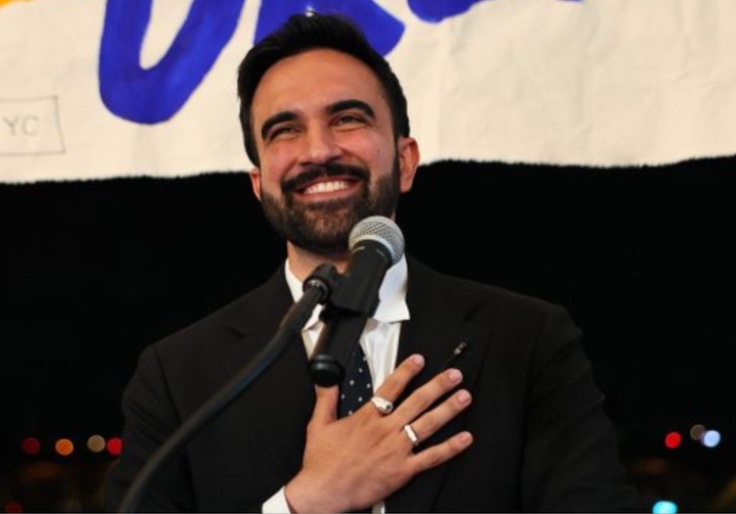
Hoekstra travelled to British Columbia in March in an apparent attempt to mend fences with Premier David Eby, a progressive politician, who has been one of Trump’smost vocal critics.
“It was a great meeting,” Hoekstra told reporters in Victoria after the meeting.“We covered a whole range of issues that you would expect. … I’m still smiling. I think he is too.”
The premier said in a statement afterward: “No matter what occurs between our governments, the Canadian and American people will always consider each other friends, neighbours and even family. While Canada’s sovereignty is not up for discussion, I will always look for ways to improve our trade relationships for the benefit of workers and businesses in B.C.”
When Northwest Territories Premier R.J. Simpson met Hoekstra, he described the meeting only “as expected.”
Ford didn’t have much to say either: “I don’t talk to him frequently. But you’re going to have to ask the president if he’s doing a good job.”
Prince Edward Island Premier Rob Lantz, who chairs meetings of Canada’s premiers, is one of the outliers, saying he has a “great” relationship with Hoekstra. “I’ve made a point of trying to build a relationship with him. I think that’s probably a good thing, and we’re getting along well,” Lantz said. “It behooves us all, I think, to have a good relationship with our American partners.”
And Alberta Premier Danielle Smith — or “Danielle,” as Hoekstra calls her — is an unabashed fan.
Though Hoekstra is a former Republican congressman from Michigan, which borders Ontario, he has said he was surprised to discover how cold it can get in his temporary home. Still, he has sought to embrace some elements of the Canadian lifestyle.
He recently recalled to a group of reporters that over the winter, he skated down the Rideau Canal, just blocks away from Parliament Hill, in a brand-new pair of skates. It felt like a much tougher workout than expected, which made sense once someone mentioned that he was supposed to sharpen the skates before using them. It was too late: He had spent the day riding on dull skates.
In recent months, Hoekstra’s personal appearance has also morphed, perhaps suggesting he’s become more comfortable in Canada. He has grown a trimmed white beard — having been clean-shaven since 1997 after making a bet with local high school students — and wears a thick vest, including to public events and at receptions in his Lornado mansion. Away from cameras and reporters, people who work with him describe him as warm, friendly and even funny.
He has praised American pop star Katy Perry’s relationship with former Prime Minister Justin Trudeau as a positive example of the Canada-U.S. relationship. He even joked that Trudeau, despite his own failed relationship with the president, might want to pick up the phone and play matchmaker between Carney and Trump to help get a trade deal done.

And he has been a gracious host of late, throwing an Artemis II “splashdown” party to watch the spacecraft return to Earth.
“This is a great testament to the long, long friendship and cooperation in so many different areas between the U.S. and Canada,” Hoekstra told his guests, which included a POLITICO reporter. He proclaimed that if Canadian astronaut Jeremy Hansen and his three American colleagues were forced, they’d emerge from their space capsule with a newly renegotiated United States-Mexico-Canada Agreement.
Still, for all of the diplomatic niceties, Canadians know they’re dealing with a difficult negotiating partner. They’re paying close attention to Hoekstra’s every word.
“At the end of the day,” the provincial official told POLITICO, “anybody trying to reach a deal and resolve a problem needs to understand their opponent.”
Hoekstra dropped some pretty clear hints at the March conference where he was extolling Canada as a partner, suggesting that Canadians were free to ignore his messaging, but that it would have consequences.
“They can make up their own minds about me, about whether they trust me or not,” Hoekstra said in the interview. “I represent the interest of the president of the United States of America.”

The tough-talking envoy is very aware of Carney’s rhetoric about “diversifying” Canada’s military and energy relationships by strengthening ties with “reliable allies” in Europe and elsewhere.
At the March event, he noted that Canada is “reassessing” its bond with the United States. “That’s fine. You’re a sovereign country. Your defense relationship and stance with the United States, that is a decision you make.”
But one thing, Hoekstra added, is not in doubt: “We’re going to fix the energy issue for the United States of America.”
“We’re open to doing it together,” he said. “Canada has to decide whether that’s what they want.”






 English (US)