.png)
 1 hour ago
2
1 hour ago
2

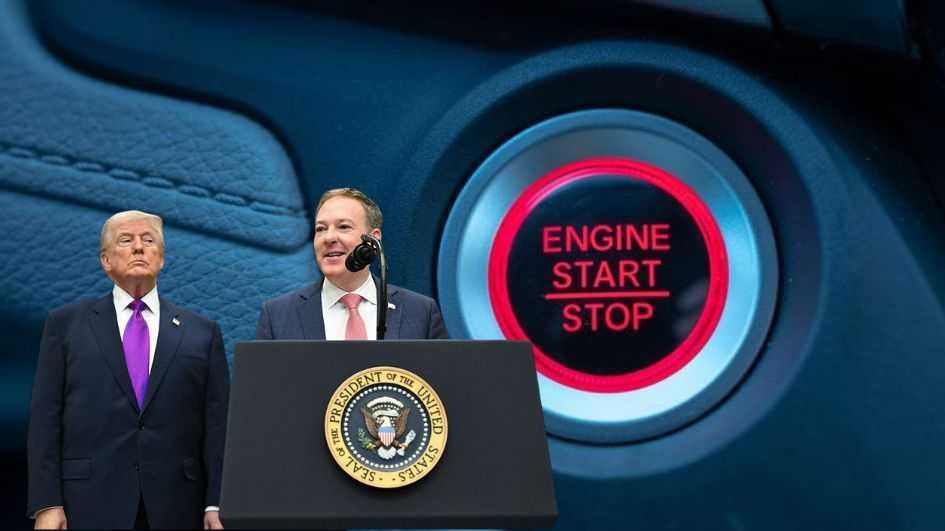
The EPA just delivered news that millions of fed-up American drivers have been waiting for: Automatic start-stop technology is no longer being propped up by federal regulation.
On February 12, 2026, President Donald Trump and EPA Administrator Lee Zeldin announced what the administration is calling the largest deregulatory action in U.S. history. The move scraps the Obama-era 2009 greenhouse gas endangerment finding and wipes out federal greenhouse-gas standards for vehicles dating back to model year 2012.
‘Mechanically, it’s a disaster waiting to happen. Constant restarts accelerate wear on starter motors — even reinforced ones.’
For everyday drivers, the practical consequence is simple and satisfying: The regulatory credits that encouraged automakers to jam start-stop systems into vehicles are gone.
‘Universally hated’
Zeldin didn’t mince words, calling start-stop an “almost universally hated” feature — an “Obama switch” that makes your engine shut off at every red light. Trump echoed the sentiment, blasting the policy as a regulatory disaster that drove up prices and forced unwanted technology on consumers. Even the EPA’s own announcement acknowledged what drivers have been saying for years: A feature that kills your engine at stops and jolts it awake again was never embraced voluntarily — it was incentivized.
For years, automakers chased roughly a 1-mile-per-gallon compliance credit tied to start-stop systems. On paper, it helped meet greenhouse-gas targets. In the real world, the fuel savings were often negligible outside of ideal lab conditions. Still, the feature spread everywhere — from sedans to SUVs to trucks — not because buyers demanded it, but because it was the cheapest way to check a regulatory box.
Consumers got the irritation. Automakers got the credit.
‘Disaster waiting to happen’
I asked ASE Master Technician Greg Damon what start-stop really does under the hood. His answer was blunt:
Mechanically, it’s a disaster waiting to happen. Constant restarts accelerate wear on starter motors — even reinforced ones. Batteries cycle harder and require more expensive replacements. Engine components face repeated stress, especially during warm restarts when lubrication isn’t instantaneous. In shops, mechanics see higher failure rates, specialized repairs, and higher bills. All of that complexity and cost to chase a single MPG on a spreadsheet.Is 1 MPG worth higher sticker prices, increased maintenance costs, and shorter component life?
Drivers have already answered that question. Many disable the system every time they start the car — if the manufacturer even allows it. Some vehicles require a ritual button press; others hide any permanent shutoff entirely. Subaru owners, in particular, have flooded forums with complaints about hesitation and drivability issues. Reviews and social media tell the same story: This isn’t progress. It’s punishment.
RELATED: Sick of your 'eco-friendly' car turning off at every red light? So is Trump's EPA head
 VCG/Getty Images
No incentive
After the ruling, I contacted major automakers. Their responses were identical — carefully scripted statements saying they would “review their strategy” if regulations changed. Well, the regulations have changed. Loudly. Publicly. And without ambiguity. With compliance credits vaporized, the financial incentive disappears. Expect manufacturers to quietly phase out start-stop or finally offer true, set-it-and-forget-it disable options.
The broader implications are enormous. The Trump administration projects more than $1.3 trillion in total regulatory relief, with per-vehicle compliance costs dropping by an estimated $2,400. Lower vehicle prices ripple through the entire economy. As Zeldin put it, the move restores consumer choice and eases cost-of-living pressure by removing mandates that distorted the market.
Other Clean Air Act rules governing traditional tailpipe pollutants remain in place. Emissions are not unregulated. What died here is the prescriptive, heavy-handed system that rewarded gimmicks like start-stop instead of genuine engineering improvements. Automakers now have room to pursue real efficiency — better engines, smarter hybrids, lighter materials, and improved aerodynamics — without sacrificing reliability or driver satisfaction.
Win for aftermarket
The automotive aftermarket wins too. An industry supporting more than 330,000 American jobs can breathe easier without constant compliance pressure steering vehicles away from serviceable, long-term ownership.
This is a win for common sense. Start-stop survived because Washington subsidized it, not because Americans wanted it. Without regulatory crutches, the feature faces the only test that matters: voluntary consumer demand. And the answer has always been clear.
If you’ve ever muttered under your breath at a red light while your engine shut off — then lurched back to life — this one’s for you. The era of government-mandated automotive irritation just took a fatal hit.














 English (US)