.png)
 1 hour ago
5
1 hour ago
5

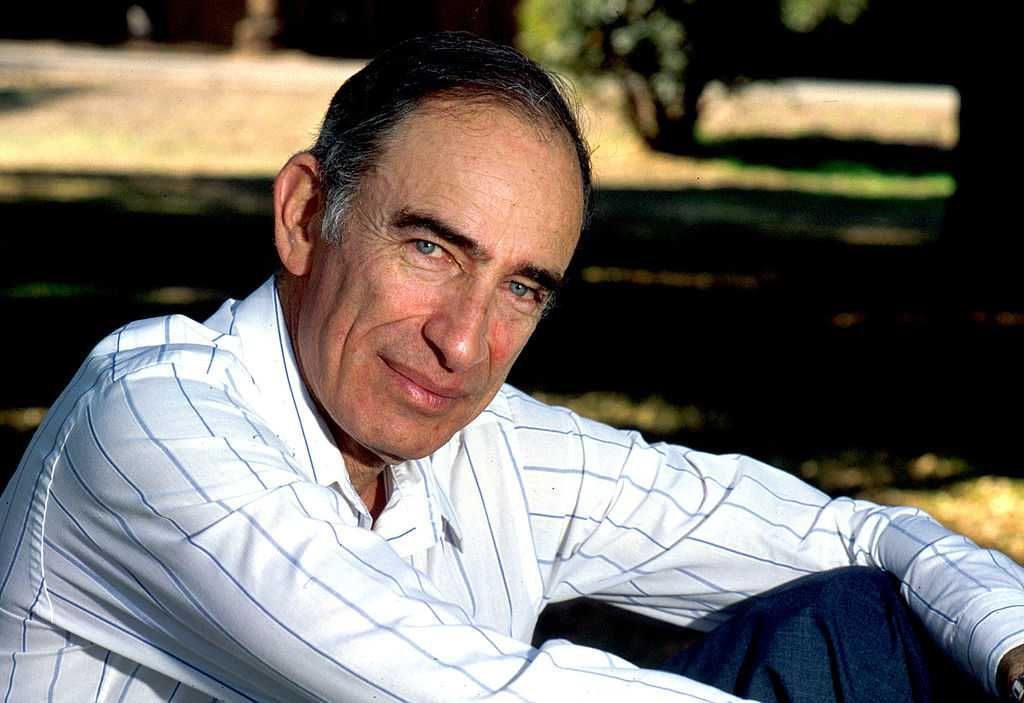
I was in the delivery room for my eighth child when I found out Paul Ehrlich died.
Ehrlich’s 1968 book “The Population Bomb” did not come from concern for the environment. It grew out of a basic contempt for his fellow man. He viewed people not as the foundation of society but as a destructive force consuming resources. His warnings about overpopulation and climate issues were not about protecting nature. They were about controlling and reducing the number of people.
Ehrlich prided himself on the hundreds of millions of babies who were never born because of his ideas. That is his legacy.
This line of thinking was not original. Ehrlich drew directly from Thomas Malthus, the 18th-century writer who argued that population increases faster than food production, leading inevitably to catastrophe. Malthus provided the intellectual justification for elites of his era to look down on the poor and the growing families among them.
Ehrlich updated the same argument with modern statistics, computer models, and environmental language. He took it farther. Ehrlich functioned as a modern version of the Albigensians, the medieval sect condemned by the Catholic Church for teaching that physical matter and the body were inherently corrupt. Those believers discouraged marriage and childbirth, seeing procreation as trapping more souls in an evil material world. The ultimate good preached by the Albigensians was for followers to starve themselves to death to show their commitment to not consuming resources.
Ehrlich repackaged these ideas in pseudoscientific terms: Stop having children, or you will destroy the planet. The message stayed the same — human life and babies are the problem.
His specific forecasts failed, one after another. He predicted that hundreds of millions of people would die of starvation in the 1970s and ’80s. That did not happen.
He wrote that India faced unavoidable mass famine and societal breakdown. Instead, new agricultural techniques dramatically increased food production there and across Asia.
In a famous 1980 wager with economist Julian Simon, Ehrlich claimed prices of key raw materials would surge due to scarcity over the next 10 years. The prices fell, and he lost the bet.
Ehrlich had an easy time settling his $10,000 bet with Simon. He mailed the check shortly after receiving both the MacArthur “Genius” Grant and the “ecologist’s version of the Nobel” for his ingeniously wrong ecology — twin prizes that netted him $485,000 (about $1.15 million today).
Despite this best-selling record of error, Ehrlich’s outlook and recommended policies gained influence among those who consider themselves the educated, evidence-based class. University departments, international organizations, and media outlets adopted his assumptions.
RELATED: NYT is getting crushed online for downplaying infamous ‘population bomb’ false alarm
 Gene Arias/NBC/NBCU Photo Bank
When he wasn’t barnstorming lecture halls demanding that parents be taxed at higher rates than selfish adults, he was making multiple appearances on "The Tonight Show,"where he warned that “there’s a finite pie. The more mice you have nibbling at it, the smaller every mouse’s share.” Johnny Carson nodded along, no doubt contemplating the alimony he had paid out over the course of four marriages.
Our elites were not simply mistaken about the facts. They embraced Ehrlich’s ideas because they already held contempt for the people they aimed to direct. Large families in middle America, working parents, and growing populations in developing nations represent something they want to limit — too many independent voices, too many demands on resources, too much resistance to top-down planning.
This shared attitude explains why policies inspired by Ehrlich persisted, from China’s one-child policy to aggressive carbon pricing that burdens ordinary households and education that frames having children as environmentally irresponsible.
The goal was never just saving the planet. It was managing populations that elites view as excessive and unruly.
It may no longer be in vogue in communist China, which is now scrambling to recover from the disaster of crushing birth rates through forced abortion and sterilization, but progressives throughout the Democratic Party and Europe are still wildly enthusiastic about suppressing new life in the name of “freedom.”
Maybe the closest Ehrlich ever came to being correct is when he predicted that Britain would no longer exist as a viable nation by the year 2000. That will not happen for another year or two under Keir Starmer’s leadership. The U.K., it turns out, won’t be undone by climate catastrophe or mass starvation, but by its embrace of Paul Ehrlich’s worldview. In 2023, England and Wales aborted nearly 300,000 babies. Live births dipped below 600,000.
Ehrlich is gone, but the impulse he represented continues in policy circles and institutions that treat the human population itself as the central threat. Families across the country continue to reject that message. They are choosing to raise children and invest in the future without apology.
Ehrlich prided himself on the hundreds of millions of babies who were never born because of his ideas. That is his legacy. It had to be, because, as he boasted throughout his lifetime, he got a vasectomy in 1963 after the birth of his first child.
Paul Ehrlich lived 93 years. His family tree spanning four generations is less crowded than the recovery room I’m in right now.














 English (US)