.png)
 1 hour ago
6
1 hour ago
6

President Donald Trump celebrated the jobs report published on Friday by the U.S. Bureau of Labor Statistics, which shows that American employers added jobs for the third consecutive month.
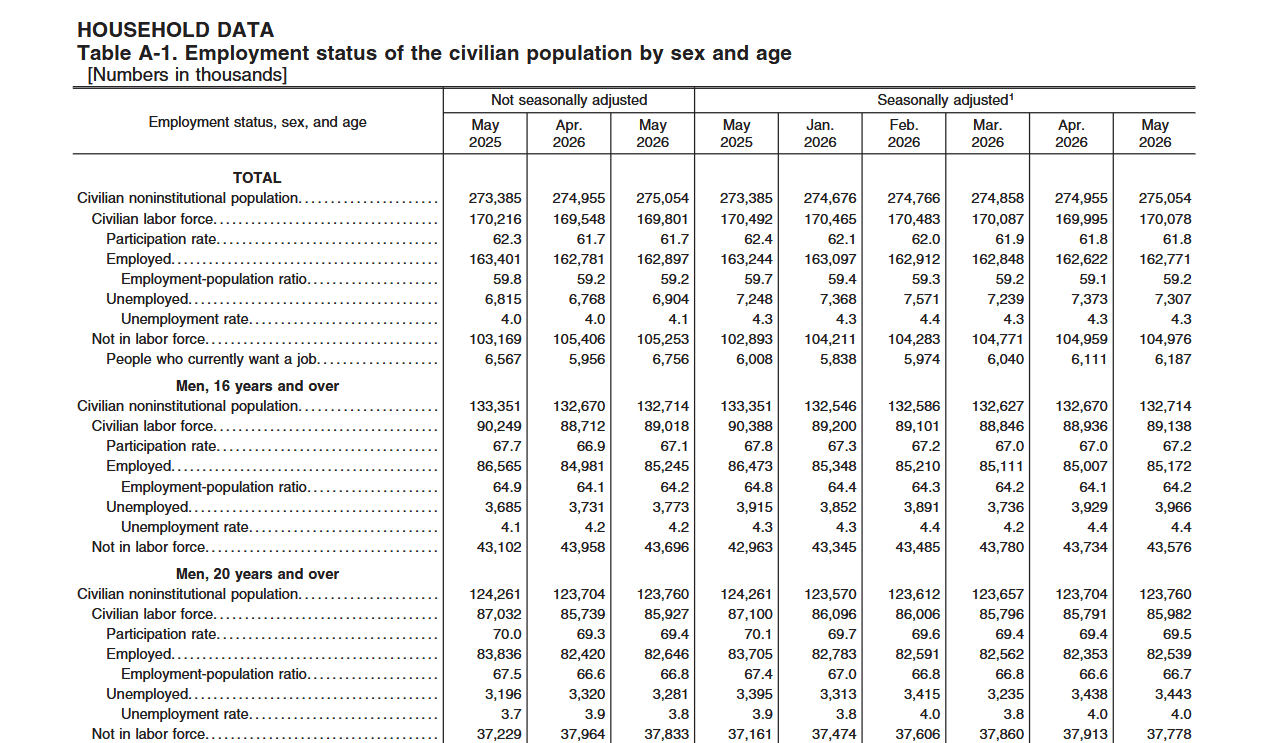
The report, which Trump called "great," says the U.S. economy added 172,000 jobs last month; the unemployment rate remained unchanged at 4.3%; the number of unemployed people, 7.3 million, "changed little over the month"; and the labor force participation rate held at 61.8%.
'Bodes ill for the country.'
Total employment growth for the months of March and April were revised up by 29,000 and 64,000, respectively.
"This is a labor market that is stronger than it was last year and is looking pretty darn solid, despite high energy prices and higher inflation generally," Gus Faucher, chief economist at PNC, told CNBC. "There's no indication that the labor market needs support."
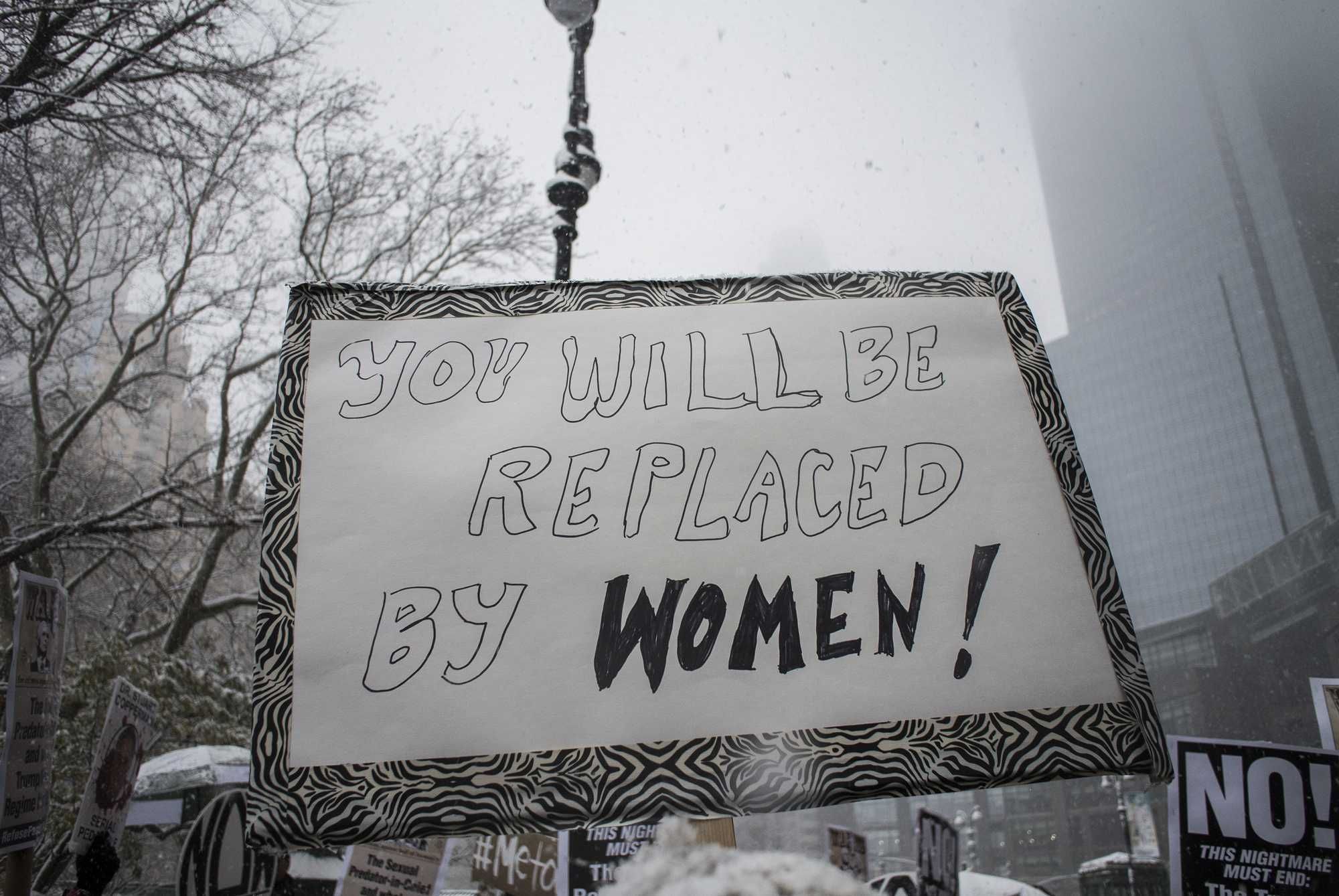
While the labor market is purportedly healthy, there are a pair of potentially destabilizing trends under way behind the scenes: the overwhelming majority of new payroll jobs are going to women, and a staggering number of men have given up on finding a job.
Jason Riley, a senior fellow at the Manhattan Institute, recently highlighted that "the share of American men in the labor force has dipped to record lows." Labor Department data revealed last month that one in three men were neither working nor looking for a job.
RELATED: Steelworkers need a future, not another merger war
 Keystone-France/Gamma-Keystone/Getty Images
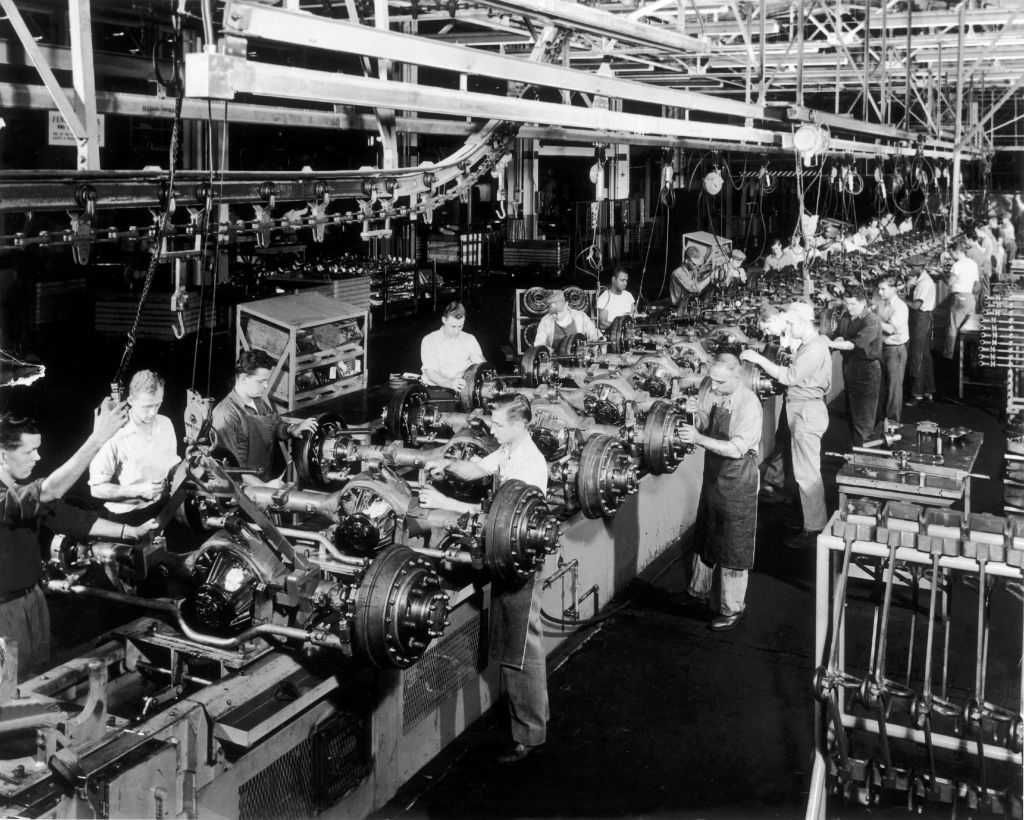
The male labor-force participation rate has declined significantly in recent years, to say nothing of the precipitous decline that has taken place over the past century. The male LFP rate was 87% in 1948, 75% in 2000, and — according to the latest jobs report — 67.2% in May.
"The premature absence of millions of able-bodied men from our workforce, combined with the continuing retirement of the Baby Boomers and significant reductions in immigration, bodes ill for the country," wrote Riley.
While there are multiple factors at play — Baby Boomers are, for instance, retiring en masse; young men are dropping off to study; there is diminished demand for non-college male labor; and prime-age men are falling to the wayside because of illness and disabilities — the Washington Post recently pointed out that:
the labor market has weakened since early 2025, with most job opportunities concentrated in areas typically dominated by women, including health care and private education. At the same time, several male-dominated industries, including manufacturing, transportation, and mining have shed jobs, leaving a mismatch between typical skill sets and job opportunities for men.It's evidently a new day for female labor.
Whereas in the mid-1970s, women held roughly 40% of jobs in the U.S. — not including agricultural work or self-employment — they now hold the majority of jobs in the country.
NPR's "Morning Edition" reported that of the roughly 369,000 jobs created between the beginning of Trump's second term and April, 348,000 jobs went to women and 21,000 jobs went to men. In other words, 94% of the jobs went to women and only 6% to men.
Courtney Parella, a spokeswoman for the Labor Department, stressed to "Morning Edition" that raw job counts provided a "misleading snapshot" of the labor market, adding that "both men and women are benefiting from a strong economy."
Women have picked up the supermajority of net new payroll jobs in part because of the growth in female-dominated sectors, namely health care — where women hold roughly 80% of the jobs — and social assistance.
Like Blaze News? Bypass the censors, sign up for our newsletters, and get stories like this direct to your inbox. Sign up here!














 English (US)