.png)
 1 hour ago
2
1 hour ago
2
Legal experts and commentators toed a careful line Wednesday in responding to President Donald Trump’s State of the Union address, with many using the moment to weigh in on the broader legal and political climate itself, rather than Trump’s actual remarks.
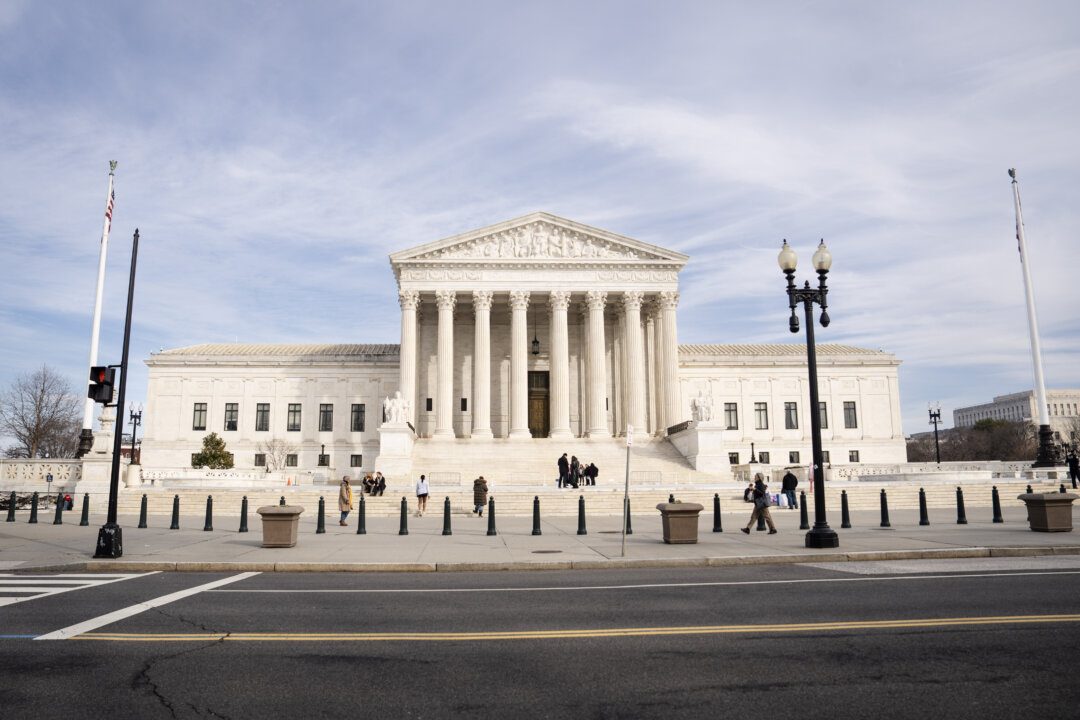
Some of the biggest moments of Trump's address included his response to the Supreme Court’s 6–3 ruling that invalidated his use of a 1977 emergency law to impose tariffs on most U.S. trading partners, as well as his administration's crackdown on violent crime in major U.S. cities, among other things.
"This is the golden age of America," Trump proclaimed Tuesday night. "And you've seen nothing yet. We're going to do better, and better, and better."
SUPREME COURT BLOCKS TRUMP TARIFFS IN MAJOR TEST OF EXECUTIVE BRANCH POWERS
Trump struck a notably measured tone in responding to the Supreme Court's tariff ruling during the State of the Union, briefly describing the 6–3 majority decision as "unfortunate" before pivoting to highlight the 10% import fees his administration had announced shortly after the high court's ruling under Section 122 of the U.S. Trade Act of 1974.
"Countries that were ripping us off for decades are now paying us hundreds of billions of dollars," Trump said of the tariffs, which he previously described as "life or death" for the nation's economy.
"The good news is that almost all countries and corporations want to keep the deal that they already made" with the U.S., Trump said Tuesday night, "knowing that the legal power that I as president have to make a new deal could be far worse for them."
"Therefore, they will continue to work along the same successful path that we had negotiated before the Supreme Court's unfortunate involvement," he added.
Four of the nine Supreme Court justices present for the State of the Union, including Chief Justice John Roberts, Justice Elena Kagan and Justice Amy Coney Barrett, who had ruled against Trump's use of the International Emergency Economic Powers Act, or IEEPA, to unilaterally enact his tariffs.
Trump's comments marked a shift from his more abrasive tone in the immediate aftermath of the tariff decision, when he said the high court was "incompetent" and that the majority should be "absolutely ashamed" of themselves "for not having the courage to do what’s right for our country."
TRUMP TAKES DIRECT SOTU SWIPE AT DEMOCRATS OVER TAXES: 'TO HURT THE PEOPLE'
Trump's remarks during the State of the Union were a nod to his new tariffs he invoked under Section 122, or a statute that allows a sitting president to impose sweeping tariffs for up to 150 days in response to either large or serious U.S. "balance-of-payments deficits," or in response to situations that pose "fundamental international payments problems" for the U.S. Congress can extend them once the 150-day period ends.
But some experts have questioned the legality of using Section 122 to invoke the broad global tariffs — signaling what could be more legal challenges to come.
Gita Gopinath, Harvard economics professor and former senior International Monetary Fund official, noted on social media: "As long as there is plenty of demand for US debt and equities, which is the case, the US does not have a ‘payments’ problem. It can finance its trade deficits easily."
"The first thing to note is that the statute does not apply to the current US international payments position," the Peterson Institute's Kimberly Clausing and Maurice Obstfeld said Monday. "Indeed, the president’s own lawyers argued in the IEEPA case that Section 122 was no substitute for IEEPA, since balance of payment deficits are conceptually distinct from the current account and trade deficits that Trump has characterized as an emergency."
Separately, Senate Minority Leader Chuck Schumer, D-N.Y., vowed that his caucus would not approve Trump's bid to extend tariffs beyond the 150-day period.
"We will not extend those tariffs," Schumer declared, urging Republicans to join Democrats in blocking them.
Schumer linked the tariffs to higher costs of groceries, cars, and homes.
"Americans are suffering, because (Trump) is raising tariffs," Schumer said.
Trump also used his remarks to tout the significant drop-off in violent crime during his first year back in the White House, reiterating his administration's claim that the U.S. murder rate dropped to its lowest point in 125 years in 2025.
FROM GRIEF TO GOLD MEDALS, TRUMP’S SOTU GUEST LIST TELLS A BIGGER STORY
White House press secretary Karoline Leavitt previously pointed Fox News Digital and other outlets to recent data from the Council on Criminal Justice that she said shows that Trump is "delivering overwhelmingly on his promise" to restore law and order in the U.S.
"A study from the Council on Criminal Justice shows that the murder rate across America's largest cities plummeted in 2025 to its lowest level since at least 1900," Leavitt told reporters. "Let me repeat to put this in perspective, this marks the largest single-year drop in murders in recorded history."
Nationwide homicide data released later in 2026 could show killings in 2025 falling to roughly 4.0 per 100,000 residents – the lowest rate ever recorded in law enforcement or public health data dating back to 1900 and the largest single-year percentage drop on record.
Reactions to the speech — and Trump's policies — vary, but the president did win some praise from across the aisle.
"As a voter, I may not like him. I may find his long form exhausting. But when he speaks, he never wavers from American exceptionalism," Michael Ceraso, a Democratic strategist with a background in speechwriting, told Fox News Digital.
"I see someone protecting our cities against those he deems a threat to democracy, revving up the economy, managing global partners, and defeating terrorism.
Fox News Digital's Charlie Creitz, Emma Colton and Michael Ruiz contributed to this report.






 English (US)