.png)
“There are two tragedies in life,” the Irish playwright George Bernard Shaw once said. “One is not to get your heart’s desire. The other is to get it.”
It’s easy to see King Charles III, the longest-serving heir apparent in British history, as a tragic figure. The king waited 73 long years to ascend the royal throne. Now three-and-a-half years into the job he craved his whole life, Charles faces myriad challenges: poor health, advancing years, estrangement from his California-dwelling son, and the Epstein-sized scandal enveloping his younger brother.
And now this. What should have been a pinnacle moment in his reign — a state visit to America with all the pomp and ceremony that Washington can muster — has morphed into something much more serious: a high-stakes diplomatic mission to save Britain’s most important alliance.
It’s hard for Americans to appreciate the importance of the trans-Atlantic relationship in Britain. While Pete Hegseth cracks jokes about the once “big, bad Royal Navy,” Brits have long known the state of the nation’s armed forces is depressingly underpowered. But this never much mattered, given the endlessly touted “special relationship” with the United States. Images of FDR and Winston Churchill sharing cocktails; Ronald Reagan and Margaret Thatcher locked in embrace; Bill Clinton and Tony Blair as the West’s bright young things; form part of a postwar national mythology. The bond is unbreakable, Brits have told themselves for 80 years. No nation is closer to the U.S.
This special relationship — partly real, partly imagined — has allowed an entire generation in Britain to grow up feeling untouchable, safe under the impenetrable shield of the U.S. military umbrella. When anti-Brexit campaigners tried to warn in 2016 that leaving the EU would be a risk to national security, they were laughed out of town. Europe doesn't keep us safe, the Brexiteers said, convincingly. That job belongs to NATO — the most successful defensive alliance in modern history. Sure enough, Britain voted to leave the EU in June 2016. Donald Trump was elected president four months later.

It’s taken another decade of turmoil to bring us to this point, but NATO now looks holed below the water line. It’s a “paper tiger,” Trump has said repeatedly over recent weeks, dropping hint after hint that he may no longer adhere to NATO’s central tenet — that an attack on any one of its members is an attack on all. With a violent, aggressive Russia waging all-out war upon a European neighbor, this is not the abstract threat it once was.
Trump is angry at every NATO country, for none came to his assistance after he launched his own war of aggression upon Iran. But he has reserved particular ire for Britain, whose prime minister Keir Starmer equivocated when Trump asked to use British air bases to fly his bombing missions. “We will remember,” a furious Trump responded in one of many Truth Social outbursts. “We don’t need people that join wars after we’ve already won!" The president has given multiple interviews to British news outlets to hammer his point home.
The relationship with Starmer — once warm and friendly — appears damaged beyond repair. Trump lost respect for the prime minister when he responded to the president’s request by saying he would need to consult his Cabinet. (In Britain’s parliamentary system of government, the Cabinet is the senior-decision-making body, and the prime minister the chair. But Trump has little time for constitutional norms.) “You don’t have to worry about a team,” Trump says he told Starmer. “You’re the prime minister. You can make a decision.”
Even as he pounds on the hapless prime minister — “This is not Winston Churchill that we’re dealing with,” Trump has repeatedly noted — the president’s respect for Britain’s royal family endures. Trump eulogized Charles’ late mother, Elizabeth II, with whom he spent time during his first term in office. Trump has gloried in the royal grandeur of two state visits to the U.K. And since returning to power 15 months ago, the president has struck up a surprisingly strong relationship with Charles. “I look forward to spending time with the King, whom I greatly respect," Trump wrote on Truth Social last month. "It will be TERRIFIC!"

Opposition voices in Britain, particularly on the populist left, have called for the trip to be cancelled, suggesting Trump no longer deserves the honor of a royal visit. But that was never going to happen; the British state needs this trip, and needs it to go well.
And so it is with Charles that the nation’s hope for a détente lies — a 77-year-old unelected, unappointed leader of the British upper classes, whose only qualification is being a member of the most famously dysfunctional family on the planet. Yet somehow, it’s fallen to him to make peace with President Trump.
At first glance, the pair have little in common — indeed, the juxtaposition of the brash, motormouthed New York real estate developer with the painfully awkward English aristocrat has the makings of a decent sitcom. In political terms, too, they are miles apart. Charles has spent decades campaigning for more environmental regulations; Trump has spent his career blitzing through them. Charles has protested Britain’s proposed immigration clampdowns; Trump has shown little interest in limiting mass deportations.
And yet these two heads of state are more alike than they seem. Boomers in the original sense, they were both born into enormous wealth in the late 1940s, growing up in the sort of strange, privileged, distant households which rarely produce well-rounded adults. Both waited a long, long time for their ascent to political power.
And while their political outlooks are wildly different, they share a sense of nostalgia, an instinctive hankering for distinctive, distant pasts. We see it in Charles’ wistful paeons to the English countryside; and — very differently — in Trump’s forever war upon progressive cultural shifts, and his attempts to rehabilitate ’80s cultural icons. We see it in both men’s shared love of classical architecture. Perhaps they can bond over Trump’s new White House columns.
Or perhaps not. Any diplomatic mission to the Trump White House is fraught with peril, as Ukraine’s President Volodymyr Zelenskyy can testify. And hosting British royals comes with an added layer of bewildering protocol. Kings and queens are easily embarrassed — embarrassment being a fate worse than death in British society. Trump unwittingly created a minor scandal during his state visit to Britain in 2018, breaking protocol by walking in front of the queen. He was later criticised for putting a hand on her shoulder, much as Michelle Obama had done before. In other words, the bar for getting it wrong is pretty low.

And this is a president who regularly clears that low bar with glee. Only last month he was making on-camera jokes about Pearl Harbor to the Japanese prime minister. Before that he was mocking French President Emmanuel Macron’s relationship with his wife. Trump’s filter, if there ever was one, is increasingly non-existent. Will he be able to avoid cracking jokes about Prince Harry — or indeed Prince Andrew — in front of the king?
Charles, too, is well capable of a diplomatic faux pas. He can be famously grumpy, and has shown public flashes of anger in a way his mother never did. Everyone in Britain remembers the legendary hot mic moment when he badmouthed the BBC’s royal correspondent. He went viral in 2022 for his repeated irritation at malfunctioning pens. A blow-up between these two septuagenarians is hardly out of the question.
Yet there are reasons for Brits to be hopeful. Trump instinctively loves history, power and monarchy in all its forms. He loves being seen with grand, global figures; he loves the respect; he wants these visits to go well. He’s also well capable of abrupt foreign policy U-turns — in January he was threatening Colombia's president, Gustavo Petro, with death and destruction; one positive phone call later, and they were the best of friends at the White House.
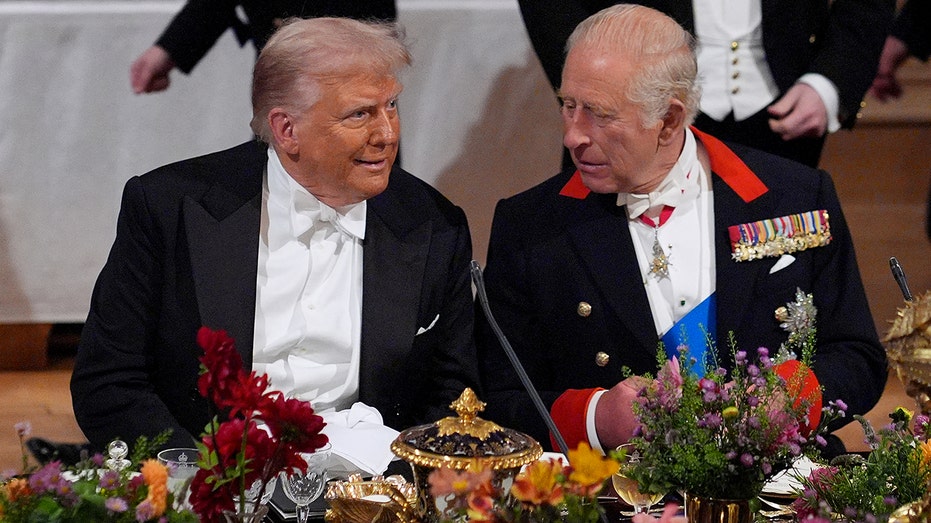
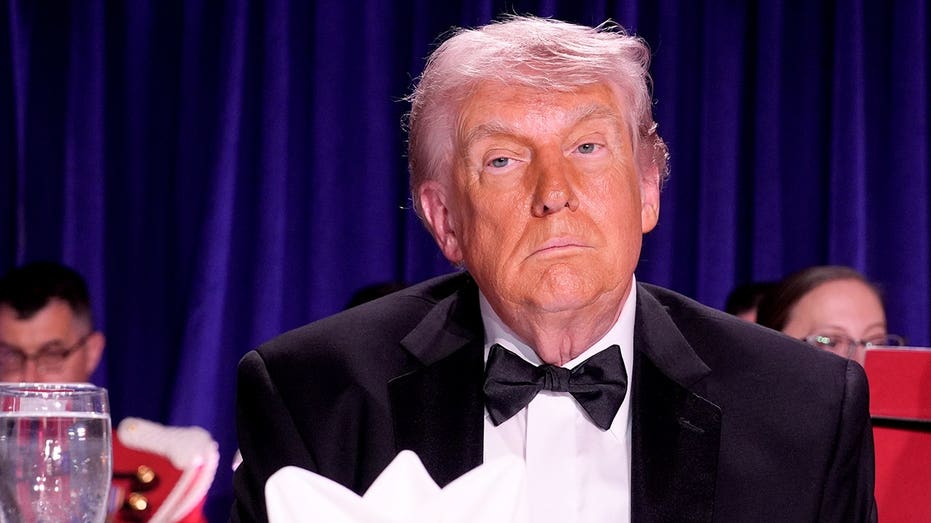
Sir Peter Westmacott, who served as Britain’s ambassador to Washington from 2012 to 2016, says that fortunately for Charles, the dynamics of a state visit tend to work in Britain’s favor. Heads of state around the world — Trump included — are typically pleased and flattered to find themselves treated as a grand dignitary on a par with the British royal family. “They like the idea that the king — or previously Queen Elizabeth — is their real opposite number,” he said. “Trump has tended to be on best behavior. He seems to like dressing up in his white tie, and all the pomp and ceremony.”
Westmacott agreed the so-called special relationship is “not in great shape” and described the timing of the visit as "problematic" for Charles, with Trump still berating the U.K. on social media. But he is optimistic the trip will go well regardless.
“Trump seems to keep his attitudes toward king and country on the one hand, and toward Starmer and the government on the other, in separate compartments,” he said. “That offers opportunities to remind him of the importance of the relationship, and of how much the U.S. and U.K. can and already do together.”

The intriguing question is whether Charles, in private, might go further. Could the king seek to engage seriously with Trump on issues close to his nation’s heart, such as NATO and Ukraine; or indeed close to his own, such as the natural environment? Queen Elizabeth II was famously taciturn about anything resembling government business, and her political views remained a mystery. But her son’s views on a range of subjects are already well known, and he retains a keen interest in world affairs, regularly meeting, for example, with Zelenskyy.
“I don’t think [Charles] will feel he’s carrying a brief for the British government; that isn’t the monarch’s job,” Westmacott said. “And yet. This is a monarch who is extremely well-informed about and interested in global issues, which I am sure he would be up for discussing privately.”
Such conversations would bring an added element of risk to the visit, given Trump’s combustible nature, but potentially offer a far higher reward. And who from Britain is better placed than Charles to deliver difficult messages to the president? The royal family remains the U.K.’s ultimate soft power play, still intriguing and beguiling America after all these years.
Charles himself has decades of diplomatic experience under his belt, working as an envoy for Britain in more than 100 different countries over 56 years as prince and king. He will rarely have encountered anyone quite like Trump, and the stakes for a royal visit to Washington may never have been higher. But then little in Charles’ royal career has been easy. And still he endures. The whole world will be watching as he tries to pull this one off.






 English (US)