.png)
The 25th Amendment has been mentioned in public debate over the past eight years — often as a mechanism for removing a president from office. That is a fundamental misunderstanding.
Adopted in 1967 in the aftermath of President John F. Kennedy’s assassination, the amendment was designed not as a tool of removal, but as a practical framework to ensure continuity of presidential power.
Its purpose is limited and precise: to address presidential inability and fill a vacancy in the vice presidency. It was not meant to address political dissatisfaction with a president.
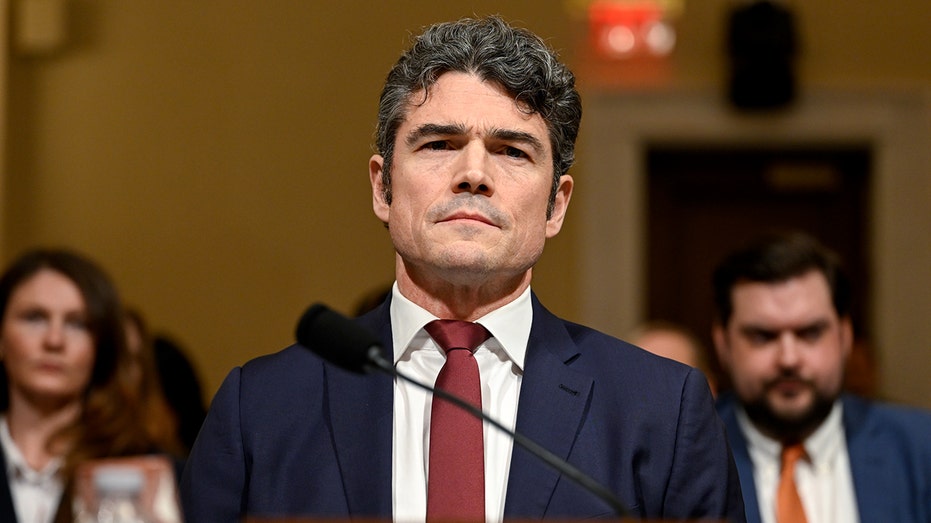
I know the history and intent of the amendment: I was given an opportunity to assist Congress in its development because of an article I wrote for the Fordham Law Review in 1963. The article detailed the history of the Constitution’s presidential succession provision and stated that an amendment on the subject was long overdue. Invited by the American Bar Association and leaders of Congress to become involved in this reform, I ultimately helped in the crafting and ratification of the 25th Amendment and in its implementation. In the decades since, I have studied and written extensively on its meaning and legislative history.
Three of its sections have been implemented since adoption of the Amendment in 1967, and they are not controversial. It’s Section 4 — which empowers the vice president and the president’s Cabinet to declare a president disabled and enables Congress to resolve a case where the president disagrees with their declaration — that receives the attention. And it’s this section that has been at the center of the misunderstanding.
In fact, what I see today is a gap between what the amendment was intended to do and how it is understood. As the world becomes more polarized and political parties more divided, the 25th Amendment is increasingly seen as a tool for presidential removal without a full understanding of its provisions and limitations.
Quite the contrary, the 25th Amendment was intended to deal only with the discharge of the president’s powers and duties by the vice president, with details respecting the president’s four-year term in office. It is practical and consistent with the principle of separation of powers.
Its purpose, carefully defined at the time of its adoption, remains narrower than discussions today suggests.
The Constitution states that “in case of the removal of the president from office, or of his death, resignation or inability to discharge the powers and duties” of the presidency, those powers “shall devolve on the vice president.” But the Framers of the Constitution were silent on the question of what was meant by the term “inability” and who had the power to declare a president disabled. In addition, the status of the vice president, after the death, resignation, inability or removal of a president, was left unclear; they did not specify whether that meant assuming the office itself or only its powers and duties.
The Eisenhower years were a reminder to the American people that presidents are mortal.
On three separate occasions, President Dwight Eisenhower sustained disabilities. On September 25, 1955, the president suffered a heart attack while on vacation in Denver and was removed to a hospital and placed under oxygen. His staff developed a committee system for handling the affairs of government, with the vice president left in the background. In June 1956, Eisenhower was removed from the White House on a stretcher and taken to Walter Reed hospital because of an attack of ileitis. He underwent an operation, while unconscious, for the removal of a nonmalignant obstruction of the small intestine. Concerned about the lack of clarity who had executive power when presidents became disabled, he called on Congress to resolve the issue.
When Congress did not do so, he developed an informal resolution by a letter agreement with his vice president. It provided for the president to declare his own inability, and when unable to do so the vice president was given the power to declare him disabled after consultation. The agreement, which was subsequently adopted by President Kennedy and Vice President Lyndon B. Johnson and then President Johnson and Speaker John McCormack, underscored both the necessity of such procedures and their uncertain constitutional footing.
The 1963 assassination of Kennedy, one month after the publication of my law review article, eventually prompted action in Congress. In 1964 and 1965, lawmakers took up the question of presidential inability alongside another persistent problem: vacancies in the vice presidency. With the deaths in office of vice presidents and of presidents creating vacancies when they died, the filling of these vacancies became a constitutional imperative.
The 25th Amendment provided a solution.
Section 1 codified precedents set when presidents died in office, beginning with President William Henry Harrison in March 1841, and ending with Kennedy in November 1963. On each occasion the vice president became president for the rest of the president’s term.
Section 2 of the Amendment provides a method for filling a vacancy in the vice presidency. In 1973 and 1974, it enabled the country to regain its stability when vacancies occurred twice in that office: Vice President Spiro Agnew resigned, and Gerald Ford was appointed as his successor under Section 2. When President Richard Nixon later resigned, Ford succeeded to the presidency and appointed Nelson Rockefeller as vice president. Both were approved by both Houses of Congress as required under Section 2.
Section 3 and 4 deal with inabilities of the president. Section 3 enables a president to declare his own inability, as several have done — Ronald Reagan, George Bush and Joe Biden — when undergoing medical procedures while unconscious, thereby transferring their powers and duties to the vice president as acting presidents.
Section 4 takes a different approach, entrusting the vice president and Cabinet with the authority to declare a president unable. When doing so, the vice president assumes the powers and duties of the president as acting president. If their determination is challenged by the president, Congress is given the power to resolve the difference, with the vice president remaining as acting president while the dispute is resolved. A two-thirds vote of both Houses within 21 days is necessary to uphold the judgment of the vice president and Cabinet. Section 4 also provides Congress, with the authority by law, to remove the Cabinet in favor of another body, which then collaborates with the vice president in reaching a decision of a president’s inability.
At the center of today’s debates over the 25th Amendment is the question of presidential “inability,” one that closely mirrors the concerns addressed at the time of its drafting.
The framers of the 25th amendment declined to place in the amendment a definition of inability. They made reference to conditions or circumstances that would prevent the president from discharging his powers and duties, mentioning physical and mental illnesses, permanent and temporary.
Lawmakers at the same time, however, were clear that unpopularity, incompetence, impeachable conduct, poor judgment and laziness were not covered by the term “inability.”
I, too, agree with that conclusion, after many readings of the entire legislative history for my books on the 25th Amendment. And yet that distinction, central to the amendment’s design, is seldom reflected in recent discussions of the amendment.
The 25th Amendment will continue to be an important part of the nation’s constitutional structure. It will help provide for smooth transfers of power if presidents die in office, resign or are removed. It keeps filled the vice presidency occupied and enables presidents to declare their own inability when having a medical procedure or surgery. Section 4 covers physical and mental inabilities and has in it a power enabling Congress to change by law the Cabinet’s participation with the vice president in declaring a president disabled. It was recognized at the time by Sen. Birch Bayh, who authored the amendment, and other framers that Section 4 might not always be a smooth process — but it is necessary, nonetheless.
The recent shooting at the White House Correspondents Dinner on April 25 where an assassination attempt was made on the life of President Donald Trump and other administration officials, underscores the continuing relevance of the 25th amendment and how we must always be prepared for tragic, worst-case scenarios. Its continued relevance makes it all the more important that it be understood as it was intended — as a way to ensure the continuity of government not as a way to address presidential wrongdoing.
I cannot help but think that in the last eight years, provisions of the Constitution with respect to the presidency have been placed in an unfavorable light — the Electoral College system, the impeachment and removal provisions and the 25th Amendment. Greater educational attention, not only to the 25th Amendment, but to the entire Constitution, itself is essential to the future of our constitutional democracy.
As Thomas Jefferson said, “If a nation expects to be ignorant and free, in a state of civilization, it expects what never was and never will be.”










 English (US)