.png)
 2 hours ago
3
2 hours ago
3

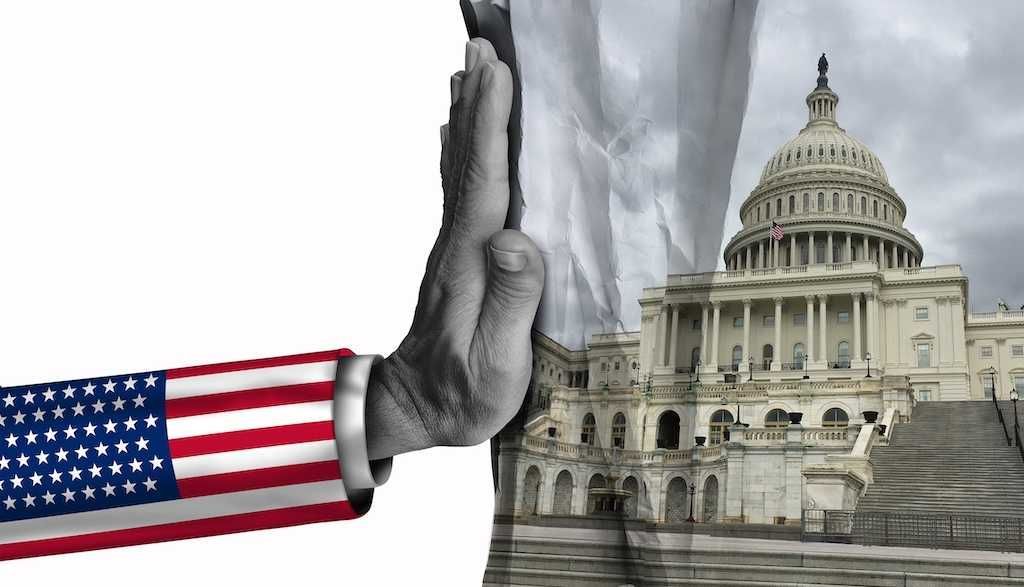
Every year, Congress flirts with a government shutdown, driven by partisan squabbling and political showmanship. It’s an avoidable cycle that harms taxpayers, disrupts businesses, and creates uncertainty for the public — without producing meaningful policy outcomes. Shutdowns have become a costly ritual Washington should abandon.
Last year’s record 43-day shutdown brought large parts of government to a standstill. Flights were canceled. Permits stalled. Military personnel and civilian federal workers went without paychecks. The nonpartisan Congressional Budget Office estimated that the lapse caused as much as $14 billion in permanent GDP loss — about the size of Kosovo’s entire economy.
Supporters of shutdown brinkmanship claim deadlines create leverage to force policy changes. In practice, shutdowns harden positions instead of producing compromise.
Now Democrats are holding up funding for the Department of Homeland Security, which has been closed for over a month. This partial shutdown is hitting TSA workers and other essential homeland security personnel.
Nobody wins in a shutdown.
The good news: Congress has tools to stop this nonsense for good. Last year, Rep. Jodey Arrington (R-Texas) and Sen. James Lankford (R-Okla.) reintroduced the Prevent Government Shutdowns Act. The bill would keep the government operating temporarily at current funding levels while negotiations continue on longer-term deals. It would also bar members of Congress from spending taxpayer dollars on travel, taking recess, or considering most non-spending legislation until they finish the budget.
Shutdowns don’t save money. Agencies burn time and resources preparing contingency plans, restarting operations, and cleaning up the mess. Workers ultimately receive back pay after funding is restored. Taxpayers foot the bill for Washington’s dysfunction.
Financial markets and businesses also pay a price. Companies that depend on permits, contracts, or federal data releases face delays that disrupt investment decisions. Entrepreneurs seeking approvals may postpone hiring or expansion. Credit rating agencies have warned repeatedly that shutdown brinkmanship undermines confidence in America’s governance — an unnecessary risk for the world’s largest economy.
The politics make reform urgent. Nearly all government funding is set to expire just weeks before Election Day, a pressure point at the height of campaign season. Recent history shows how easily the minority party can see strategic advantage in prolonging a lapse to reinforce a narrative of chaos and dysfunction heading into the midterms.
RELATED: Bidenflation? Trumpflation? Try unipartyflation
 RonBailey via iStock/Getty Images
Americans expect disagreement in a democracy. They also expect basic governance to continue. Shutdowns signal that politicians will use essential functions as bargaining chips. That deepens cynicism about institutions and reinforces the belief that Washington prizes partisan victories over practical solutions.
Supporters of shutdown brinkmanship claim deadlines create leverage to force policy changes. Last year, Democrats tried to use a shutdown threat to extend temporary, expensive tax credits to subsidize Obamacare. In other cases, Republicans tried to use shutdowns to force a repeal of Obamacare. Neither strategy worked. In practice, shutdowns harden positions instead of producing compromise.
Ideally, Congress would pass the 12 regular appropriations bills before the fiscal year begins on October 1. It hasn’t done that in nearly 30 years, largely because the process has become a political weapon.
Avoiding shutdowns doesn’t mean abandoning fiscal discipline. It means recognizing that responsible governing requires stability alongside vigorous debate. Congress can fight over spending levels, taxes, and policy priorities without threatening the continuity of government operations.
Washington should end the brinkmanship, reopen the government, and adopt reforms that keep shutdown threats from holding the country hostage again.










 English (US)