.png)
 2 hours ago
2
2 hours ago
2


In recent years, the national conversation has drifted toward the Arctic and the geopolitical contest unfolding there. Greenland pops into the headlines as a strategic prize for the United States. But the truth is, we already hold the most important ground for early warning, deterrence, and defeat of airborne threats: Alaska.
No other place on American soil combines geography, infrastructure, military capacity, and testing range in a way that can anchor what defense planners call the “Golden Dome” — a multilayered, 21st-century shield against missile and air-launched threats.
From the polar sky to the missile fields below, Alaska stands as the nation’s shield — strong, tested, and ready.
For conservatives who believe in peace through strength, constitutional defense, and American sovereignty, Alaska is not just valuable; it is indispensable.
The geographic high ground
Alaska’s advantage begins with location. At the top of the world, it sits astride the northern approaches that matter in great-power competition. When Russia or China run long-range aviation patrols, they do not approach through Florida or California. They come over polar routes.
For decades, the Alaska NORAD Region has met them first. American and Canadian forces have executed countless intercepts, sending a message that never changes: We see you. You will not approach unnoticed.
That deterrence does real work. It prevents miscalculation. It keeps pressure off the rest of the country. Alaska makes that possible by standing watch on America’s northern frontier.
Building the Golden Dome
Homeland defense now faces threats that do not fit Cold War assumptions. Hypersonic glide vehicles, low-flying cruise missiles, and next-generation systems demand fast detection, precise tracking, and long-range defeat.
A Golden Dome won’t be a single system. It will require an integrated network of sensors, communications, long-range radar, interceptors, and command and control.
Alaska already hosts critical pieces of that architecture: early-warning infrastructure, long-range radar, secure communications, and the operational footprint to integrate new systems quickly. Fort Greely anchors an established missile defense mission, with layered capability aimed at threats inside and outside the atmosphere. That foundation allows faster expansion than any “build-it-from-scratch” option elsewhere.
Closing the gaps
Coastal coverage can track many high-altitude threats. Low-altitude cruise missile detection presents a harder challenge, because adversaries design these systems to fly fast and low and to exploit radar limitations.
The Army’s Long-Range Persistent Surveillance system offers a proven way to close those gaps. Alaska’s geography provides a vantage point no other state can match across northern air corridors.
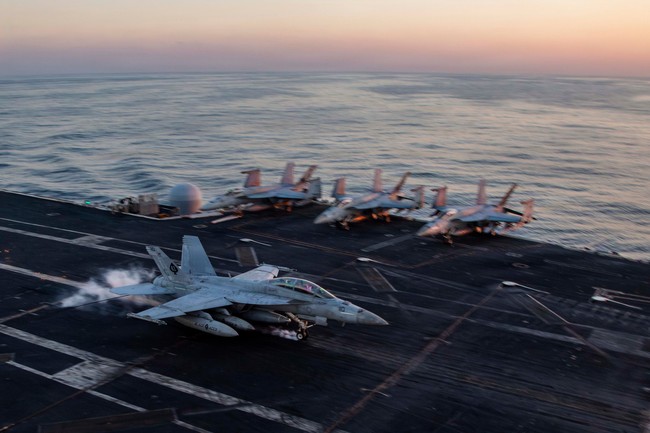
Detection only matters when response follows. Alaska maintains frontline intercept forces today, including fifth-generation fighter squadrons. A Marine Corps presence in Alaska also supports a mobile ground-based air defense mission that can move to critical nodes and build resilient, flexible layers.
A responsive homeland air defense posture starts with geography. Alaska supplies it.
RELATED: America’s next-gen weapons face a down-to-earth foe: The elements
 DAVID MCNEW/AFP/Getty Images
The world’s premier testing ground
Missile defense depends on systems tested, refined, and validated under realistic conditions. Alaska offers a unique advantage: the largest live-ordnance range on Earth.
That range supports testing and training at scale — emerging radar and sensor concepts, counter-hypersonic development, and joint-force exercises in conditions that mirror the northern environment where homeland defense may be decided.
Alaska lets the U.S. test what it builds and field what it tests in the same strategic space.
America’s shield, ready today
Alaska is more than a strategic location. Alaska is a living, operating defense ecosystem.
With infrastructure already in place, the latest technologies ready for deployment, multilayered detection systems available, and unmatched training and testing ranges at our disposal, Alaska stands ready to detect and defeat airborne threats long before they reach American cities.
Every investment that strengthens Alaska’s surveillance, detection, and intercept capacity multiplies security across the country. In an era of tight budgets and rising instability, that is exactly the kind of smart national defense conservatives should demand: protect American lives and territory by leveraging American assets that already work.
Other places capture attention. Alaska carries the burden. It remains the geographic high ground of missile defense, the first line of deterrence, and the proving ground for the systems America needs next. From the polar sky to the missile fields below, Alaska stands as the nation’s shield — strong, tested, and ready.













 English (US)