.png)
 1 hour ago
5
1 hour ago
5

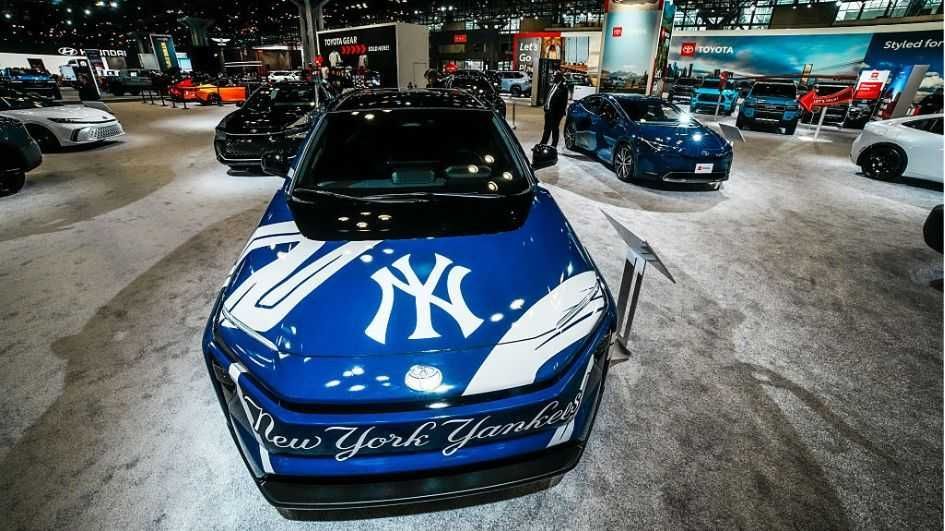
The 2026 New York International Auto Show — which runs through this weekend — made one thing clear: There is a widening gap between what the auto industry is celebrating and what consumers are actually looking to buy.
Affordability has emerged as the dominant factor shaping purchasing decisions — far more than design awards, performance credentials, or cutting-edge features.
Some automakers are exploring ways to bring down costs without stripping vehicles down to bare-bones models.
What buyers really want
The show also serves as the stage for the World Car of the Year awards, where I serve as a juror.
This year, a survey of more than 100 jurors reinforced what we’re already seeing in the market: Consumers are prioritizing affordability above all else, along with flexibility in powertrain options — gasoline, hybrid, and electric.
That may not sound surprising. But it highlights a disconnect.
Many of the vehicles being recognized at the highest levels of the industry don’t necessarily align with what buyers are actively seeking in dealerships.
Award winners vs. market reality
This year’s top honors went to the BMW iX3, selected from 58 global contenders. It is expected to be built in South Carolina and made available to U.S. customers. The iX3 also took the electric category, featuring a redesigned cockpit with an integrated head-up display.
Other winners included the Mazda 6e for design, the Lucid Gravity for luxury, and the Hyundai Ioniq 6 N for performance. The urban category went to the Nio Firefly, a model not expected to be sold in the United States.
These vehicles represent innovation and engineering progress. But they also highlight the gap between industry recognition and everyday affordability.
Show and sell
Beyond the awards, NYIAS marked a return to traditional vehicle unveilings after several years of automakers favoring private events.
Brands used the show to showcase new concepts and production models aimed at capturing attention across multiple segments.
Hyundai revealed a rugged, Bronco-inspired concept that reflects a broader multi-powertrain strategy. Genesis introduced updated luxury trims and performance-oriented concepts. Volkswagen unveiled a redesigned 2027 Atlas, expected to be built in Chattanooga.
Other reveals included a higher-performance Z model from Nissan, a redesigned Seltos and entry-level EV from Kia, and a new dual-motor electric model from Subaru. Ford Motor Company also highlighted a special-edition Expedition marking the model’s 30th anniversary.
Across the show floor, automakers leaned heavily into design differentiation — illuminated logos, special editions, and expanded trim levels — all aimed at standing out in a crowded market.
The price isn't right
The biggest issue hanging over the show wasn’t design or technology — it was price.
Average transaction prices for new vehicles are now above $50,000. That reality is reshaping how consumers shop and what they’re willing to consider.
Automakers are starting to respond. Some are exploring ways to bring down costs without stripping vehicles down to bare-bones models, focusing instead on value — delivering features that matter while cutting excess.
'No' to tech overload
Another noticeable trend is a growing pushback against excessive in-vehicle technology.
While advanced features remain available, some buyers are moving toward simpler interiors and relying more on smartphone integration rather than built-in systems.
Subscription-based features are also facing increased scrutiny. Consumers are becoming more aware of long-term ownership costs — and less willing to pay ongoing fees for features they feel should be included upfront.
RELATED: How government and Big Tech can wreck your new car's resale value
 Denver Post/Getty Images
EVs take a back seat
Electrification remains a major focus, but the tone is shifting.
Automakers are no longer presenting EVs as the only path forward. Instead, they’re balancing electric investments with hybrids and traditional gasoline options to better match real-world demand.
That flexibility is increasingly important to buyers who want options — not mandates.
Robo-stopped
Autonomous vehicle technology continues to develop, but widespread adoption remains limited.
While robotaxi services are expanding in select urban areas, challenges around safety, liability, and real-world performance continue to slow broader rollout.
For most consumers, fully autonomous driving is still a future concept — not a current buying factor.
For dealers and automakers alike, the message from this year’s show is clear: consumers are focused on affordability, flexibility, and simplicity.
Innovation still matters — but only when it aligns with what buyers can realistically afford and actually want to use.
Right now, the industry is still catching up to that reality.















 English (US)